Mendoza, Argentina · February 2026
The Roof of the Americas
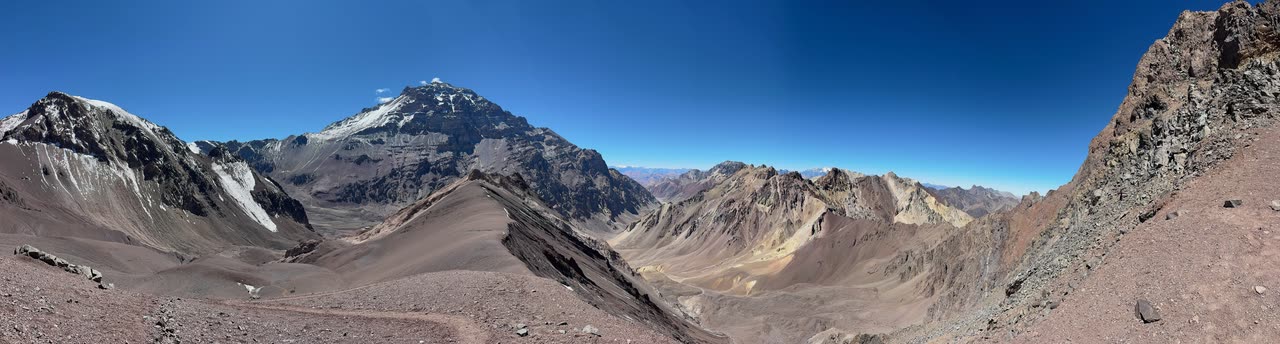
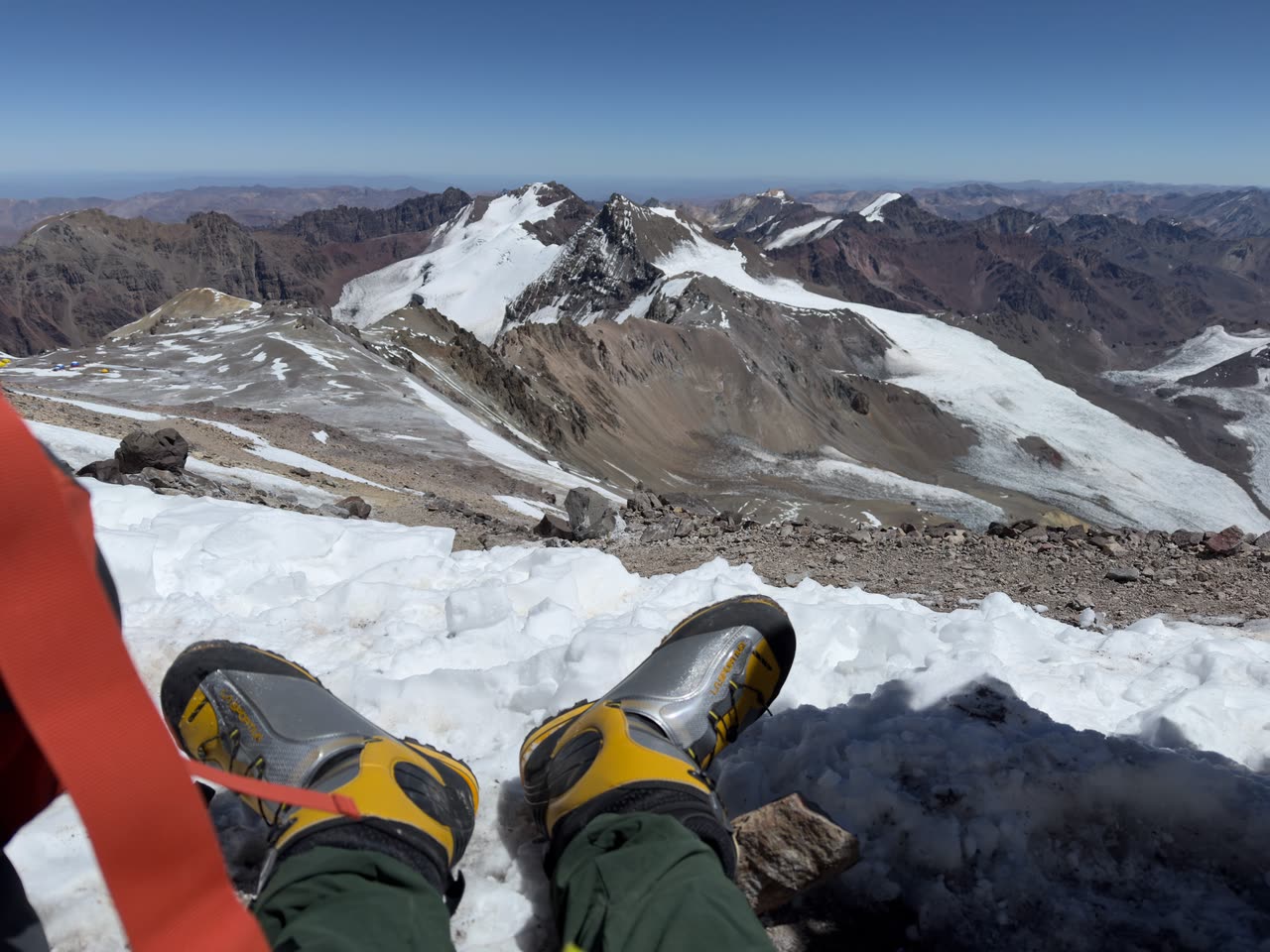
Two weeks on Aconcagua. 19,600 feet reached, 120 km/h winds endured, with seven friends along the way.
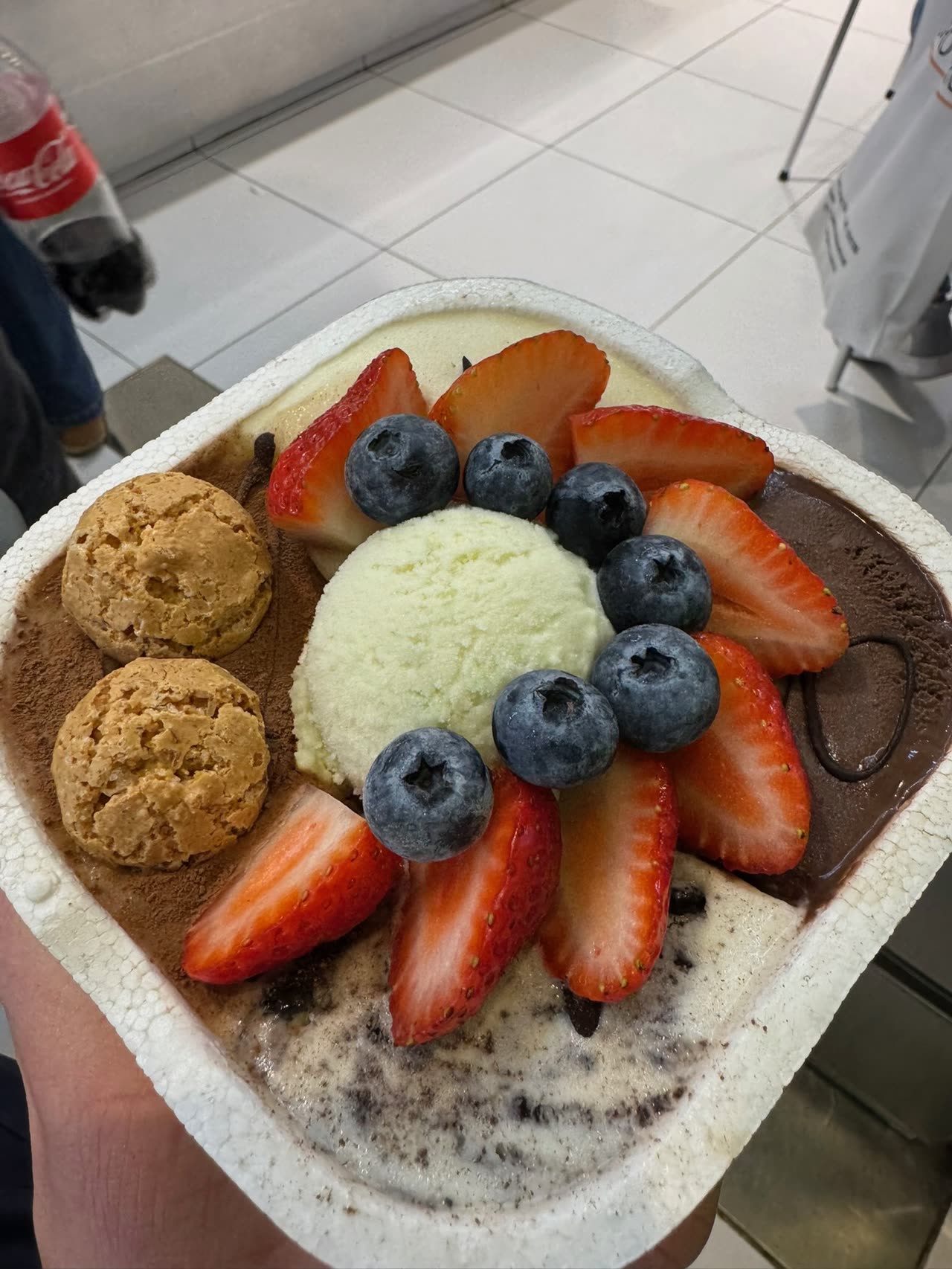
We arrived in Mendoza on February 6 from different parts of the U.S.: Collin, Doug, Eduardo, Eddie, Chris, Jayson, and me. We checked into the Park Hyatt and started with ice cream big enough to count as lunch.
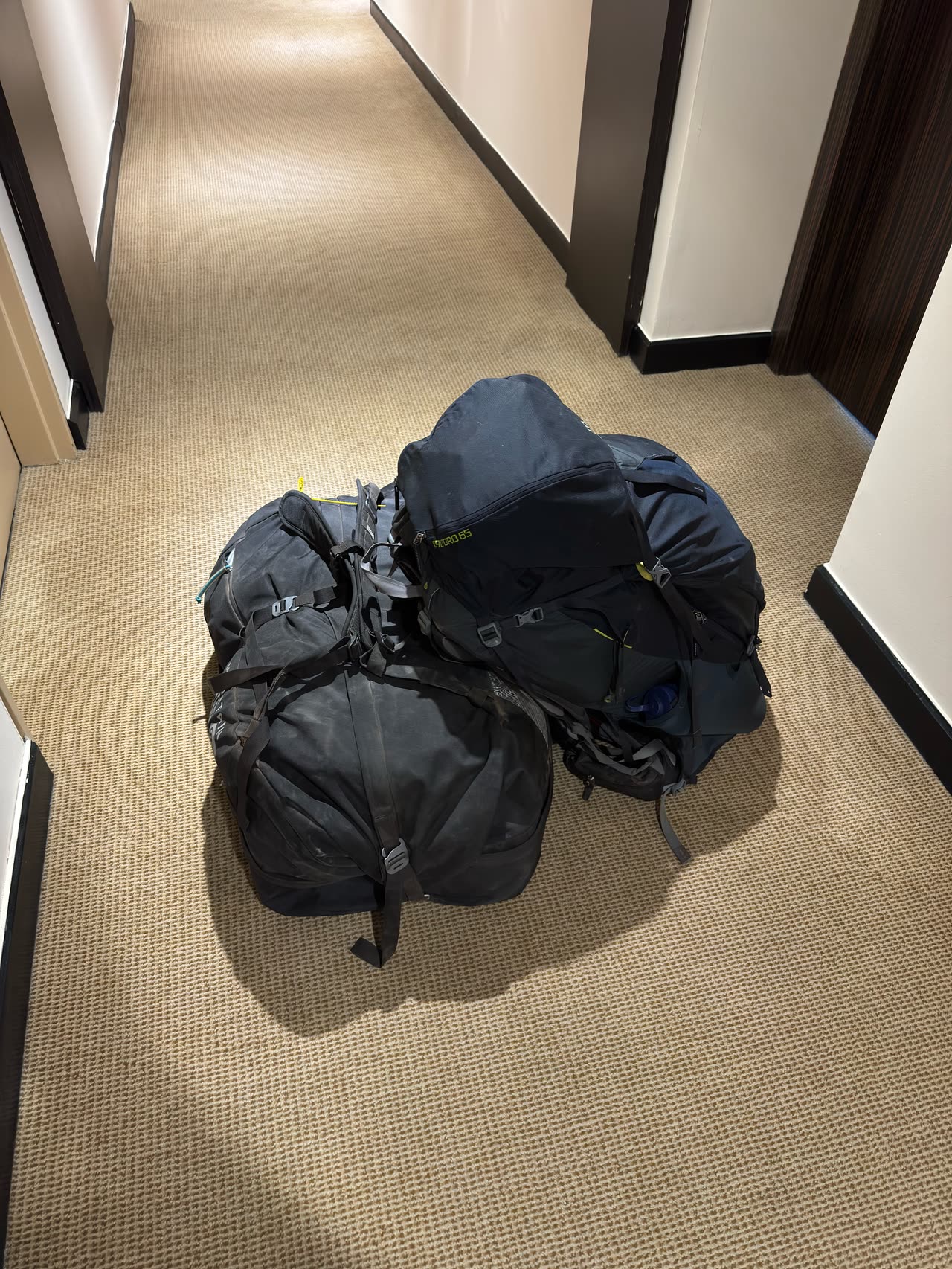
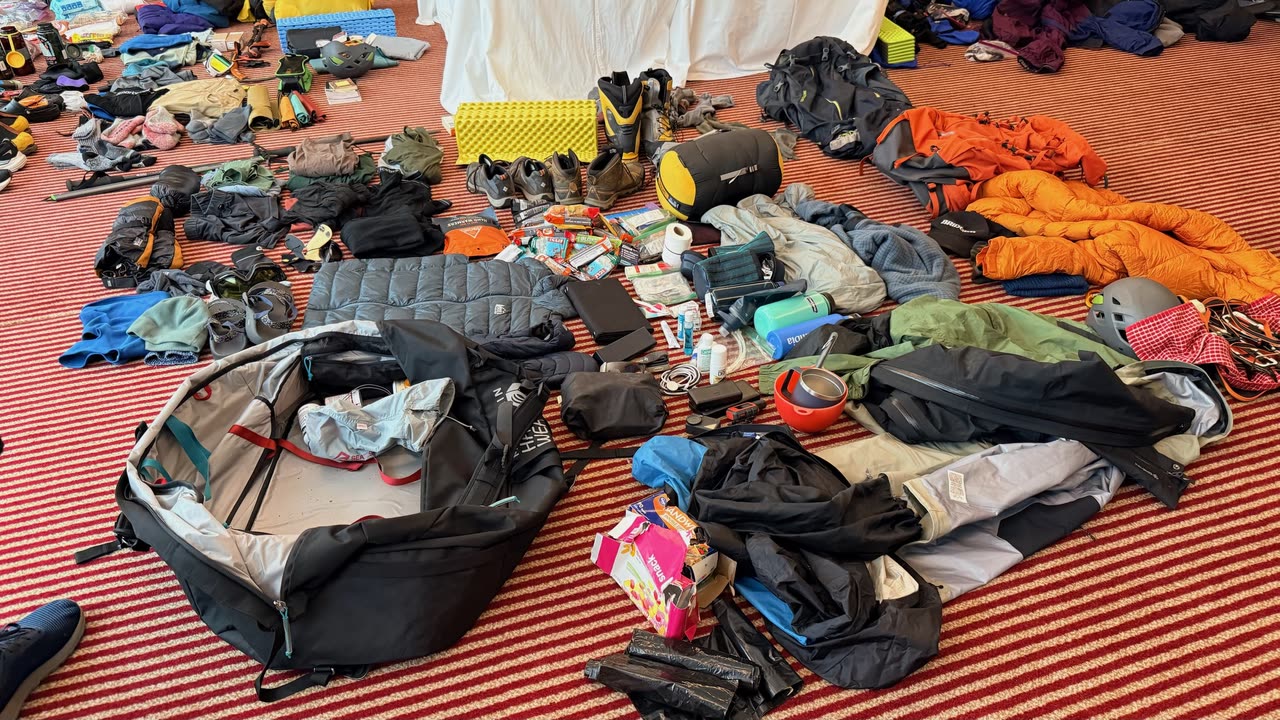
Later that day we spread every piece of gear across a full conference room for inspection and sorting.
On February 7 we drove toward Aconcagua, stopped for a long lunch and winery tasting with other groups, and met our guides Ruben and Victor.
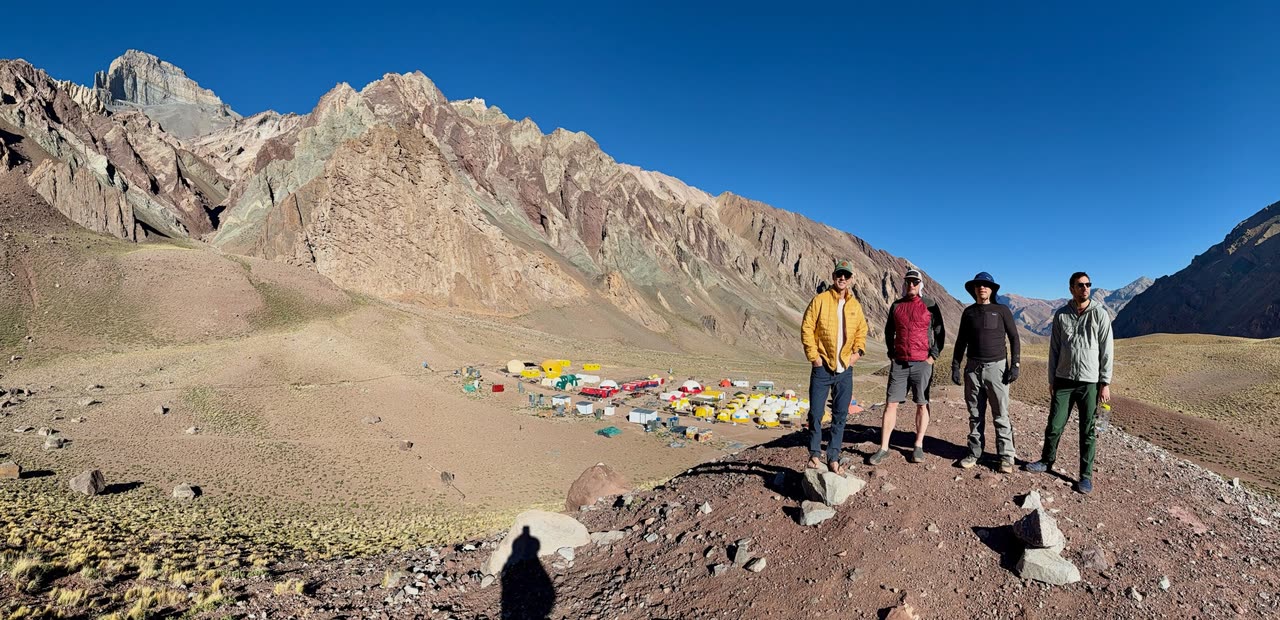
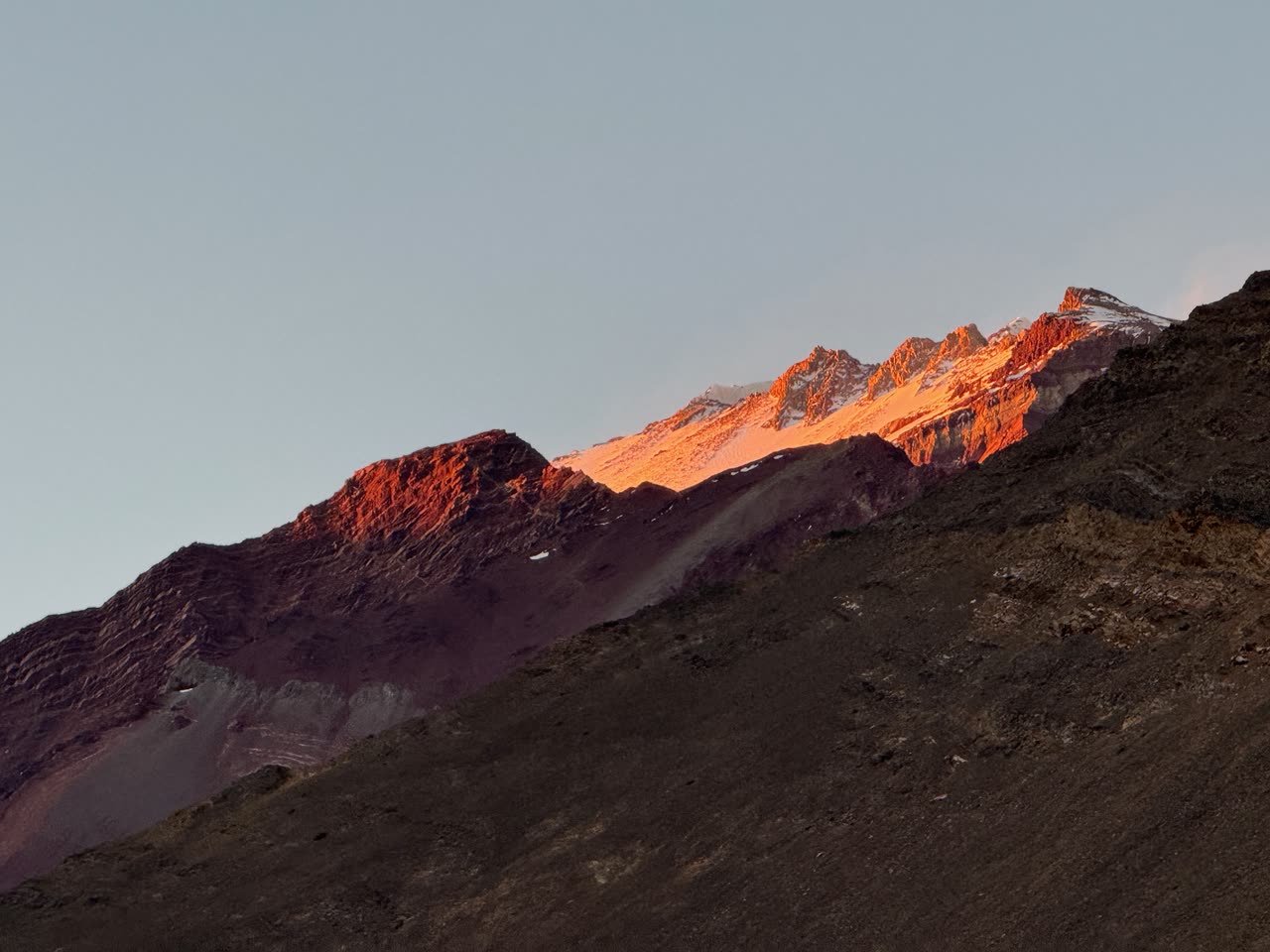
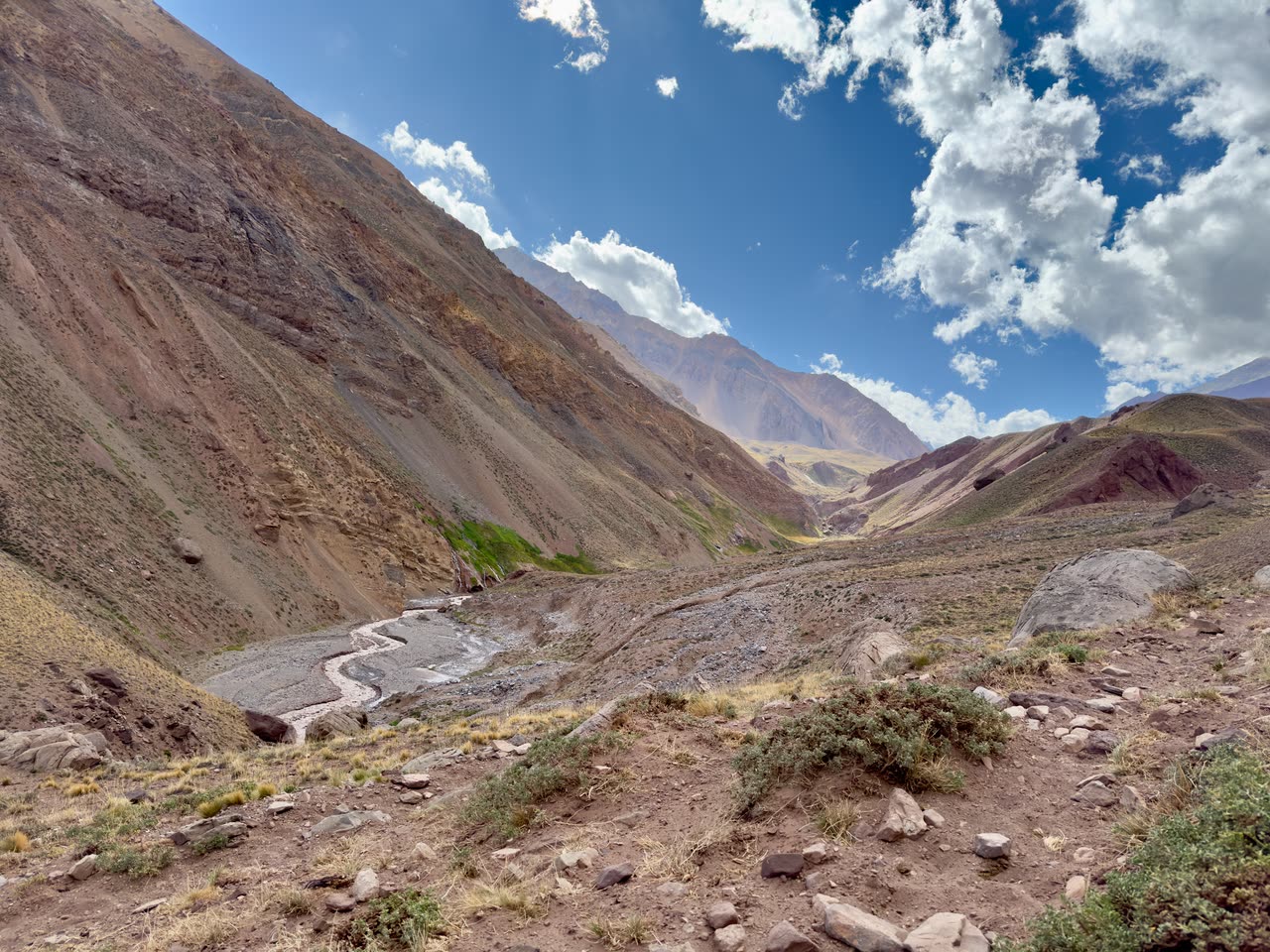
On February 8 we entered the park and hiked to Confluencia at around 11,000 feet. The valley was still green here, and we spotted guanacos, those alpaca-like locals.
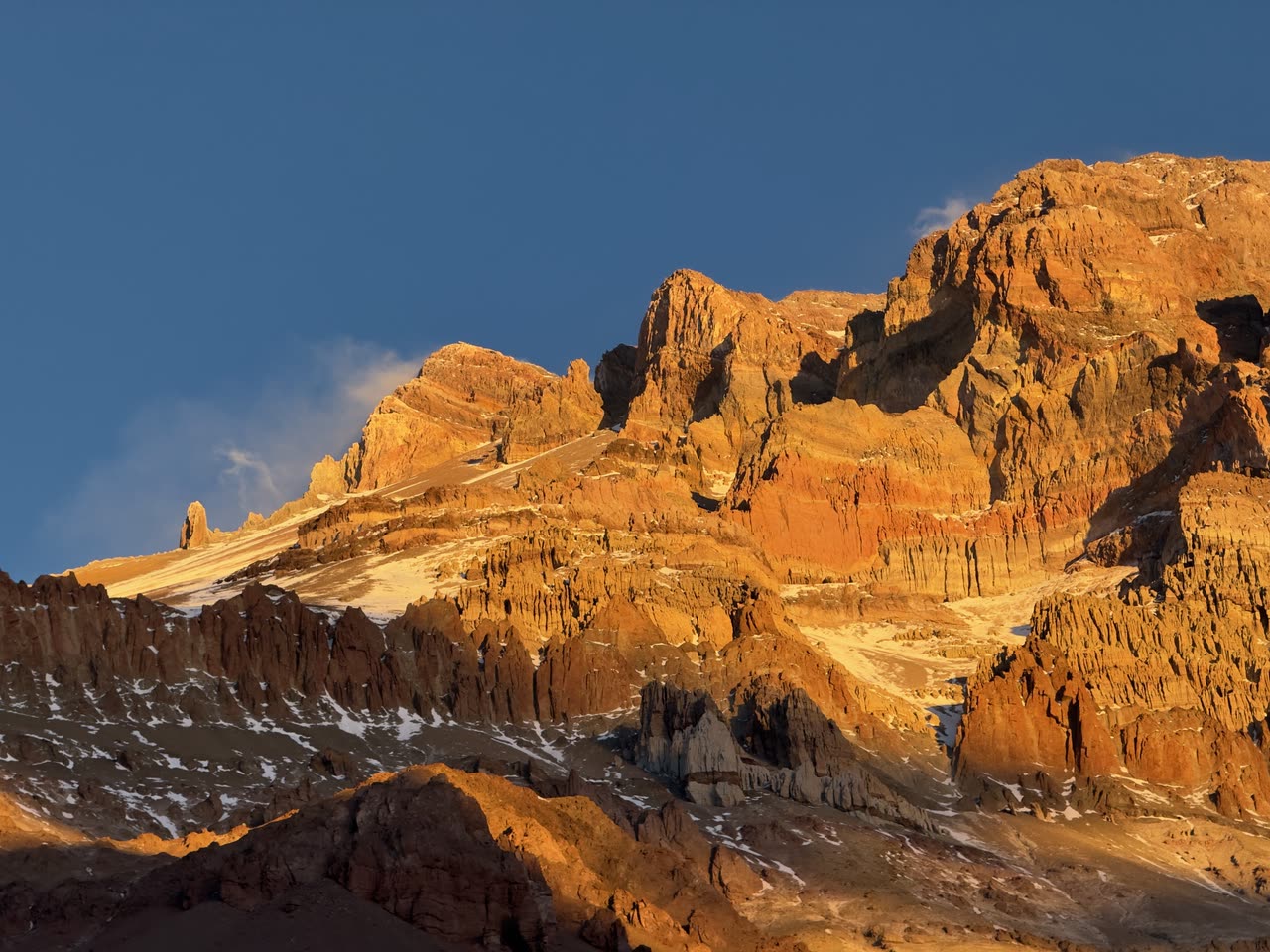
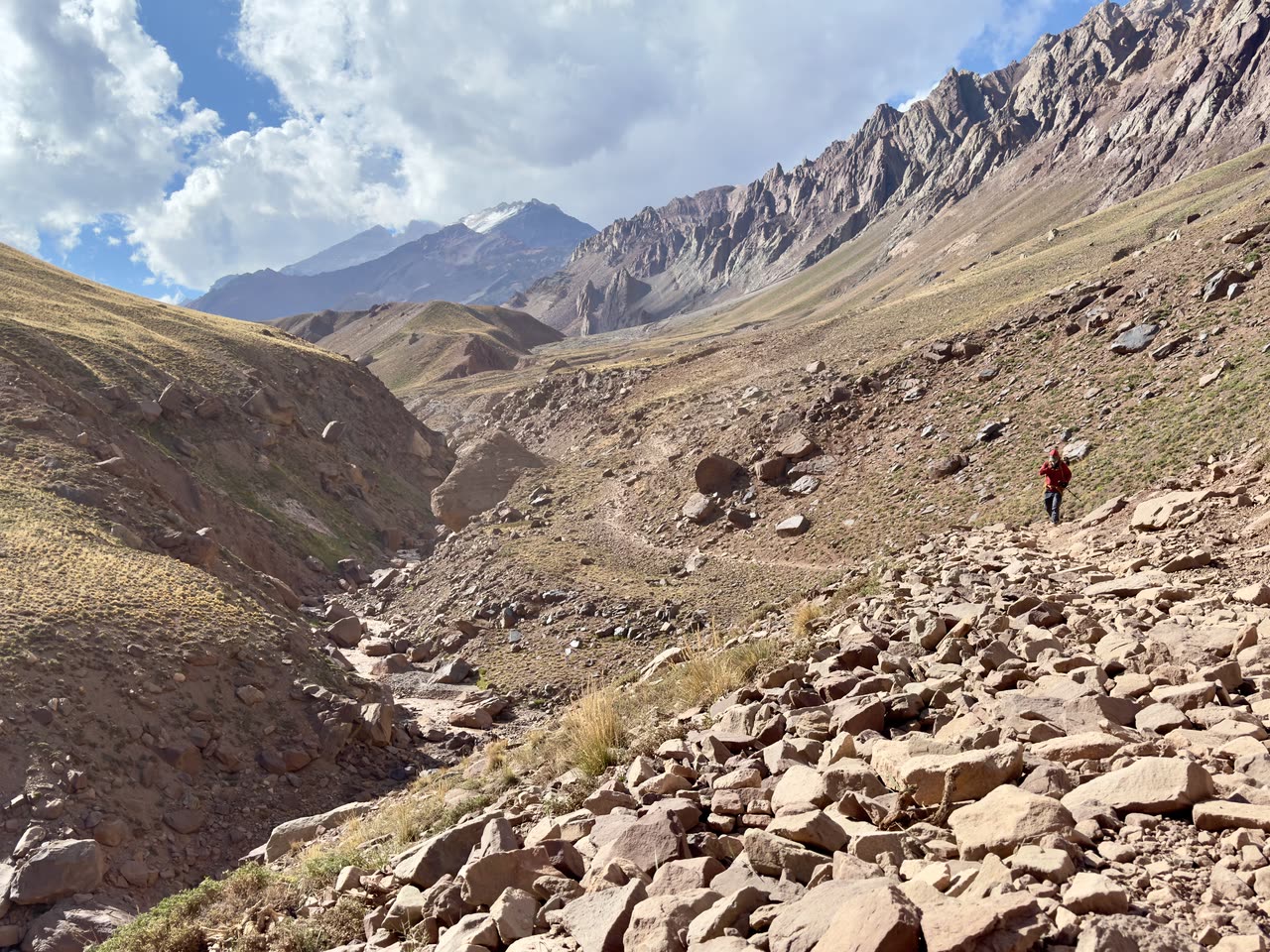
On February 9 we acclimatized toward the south face, crossing a dirt-covered glacier—the dirt layer insulates the ice beneath—and moving through fresh rockfall debris. That was when the scale of the mountain really landed.
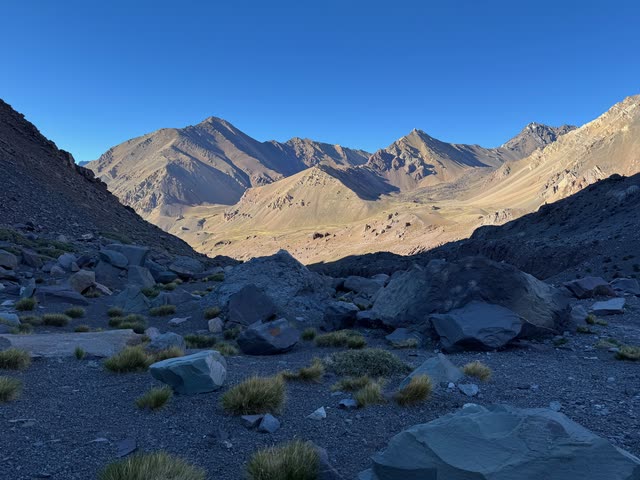
~11,600 ft · Starting across the valley: sparse vegetation and a wide rocky trail.
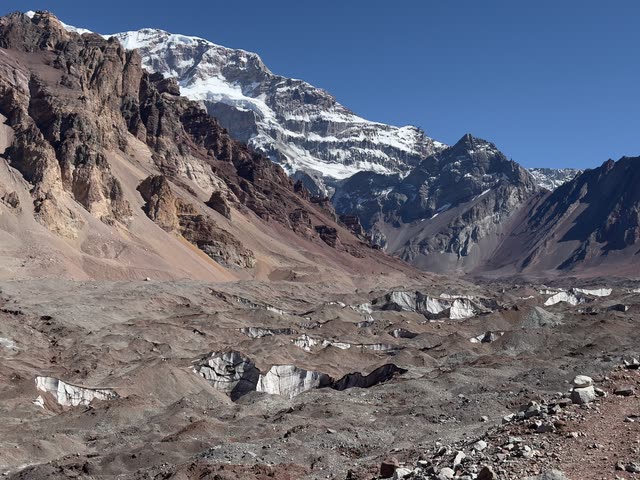
~12,870 ft · First full look at the south face, with snow and ice clinging to the walls.
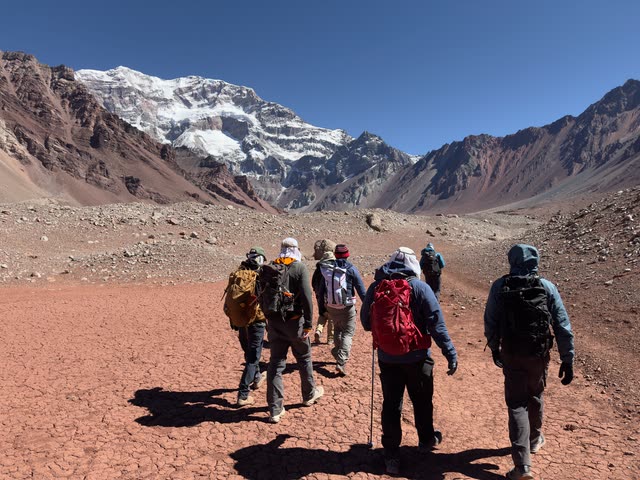
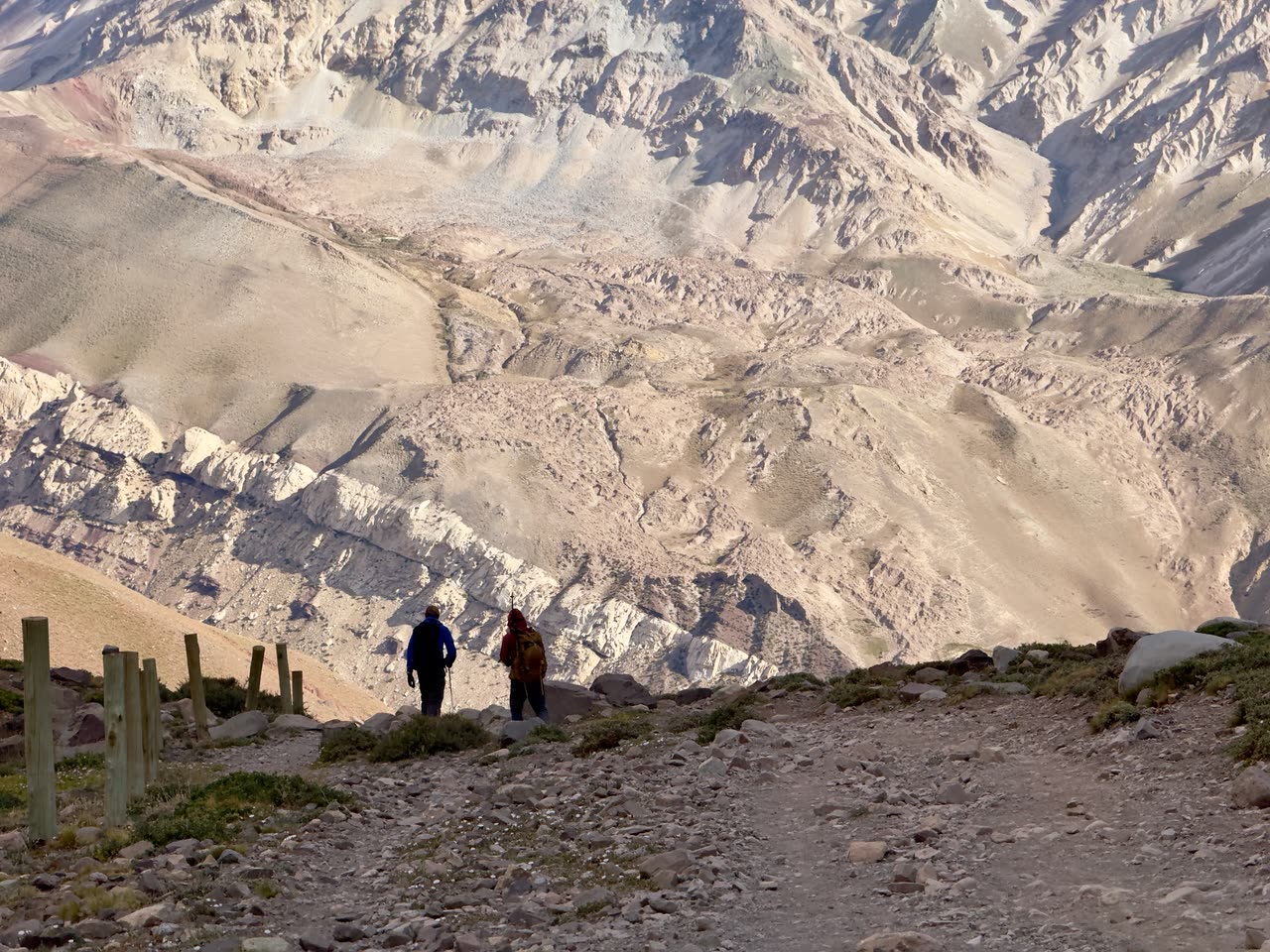
~13,090 ft · Three of us heading toward the wall. The scale finally registers.
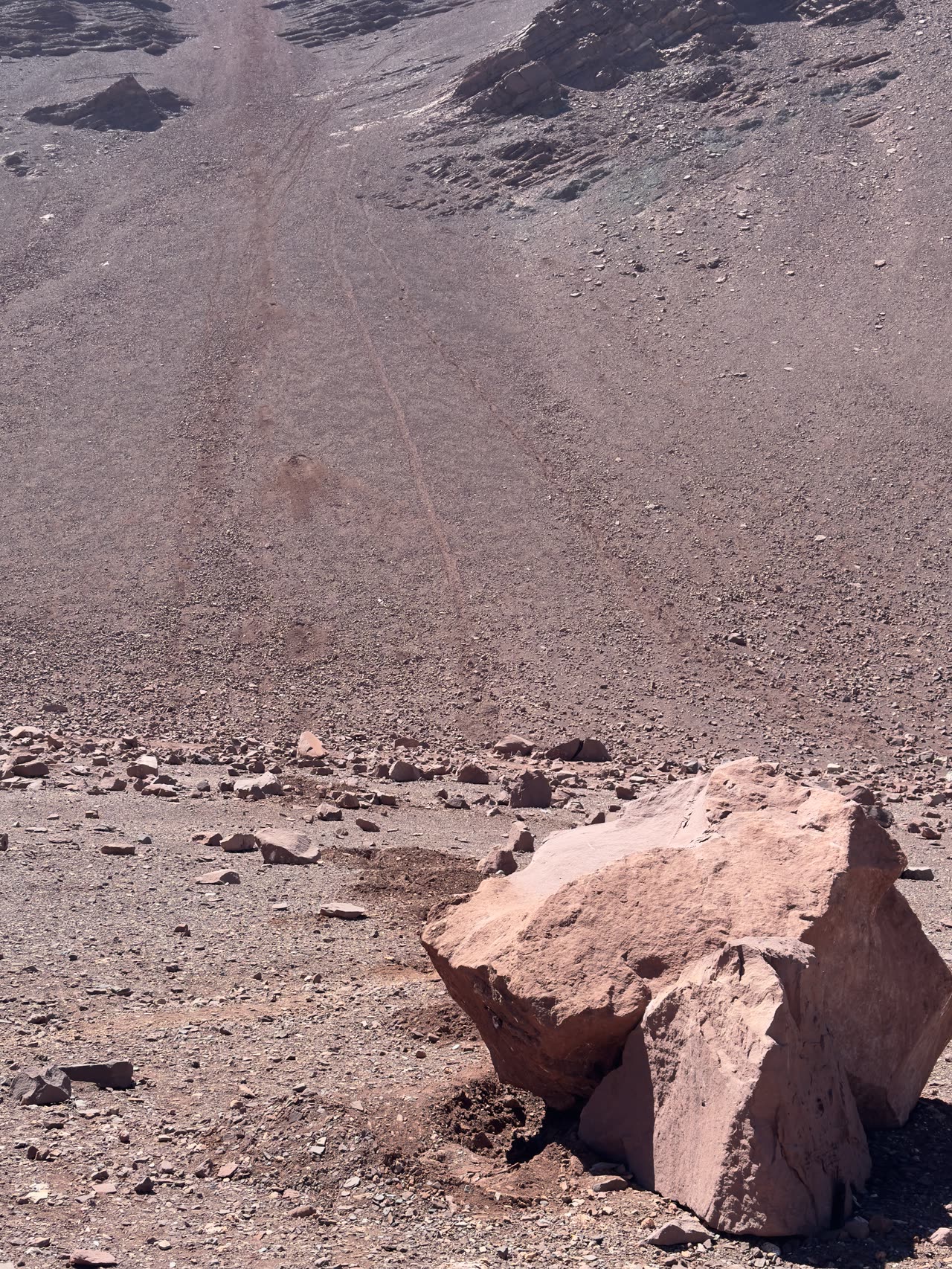
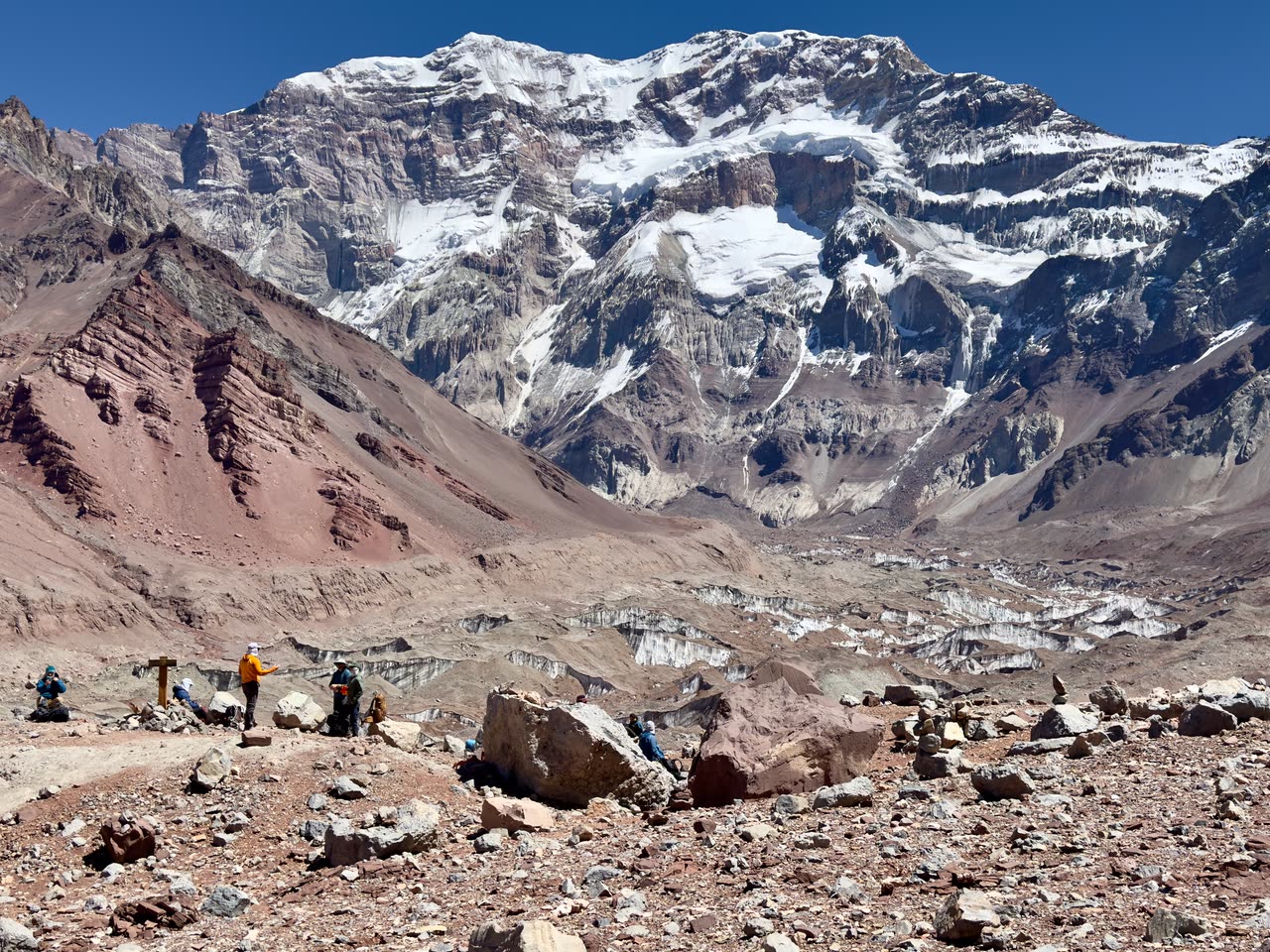
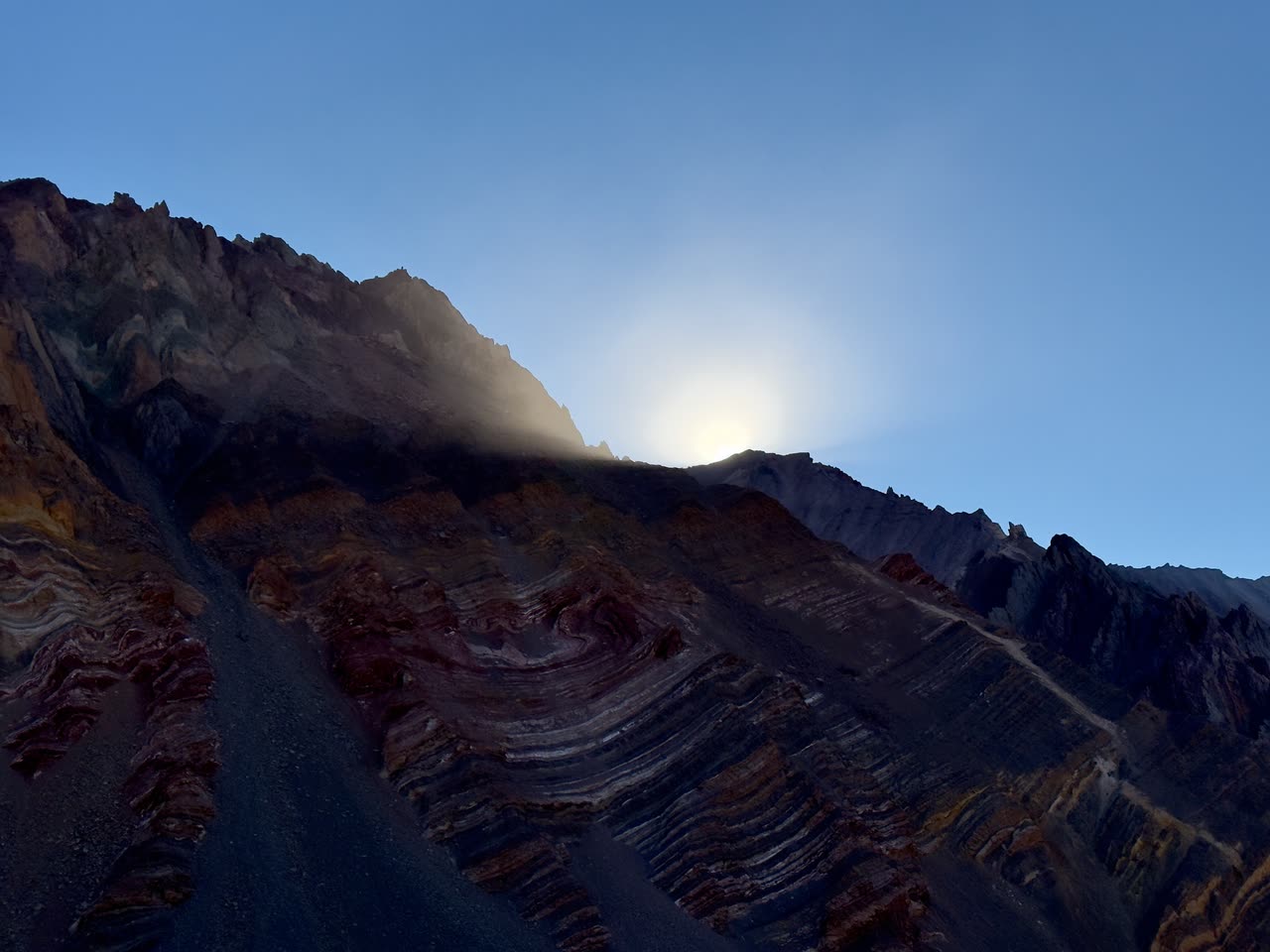
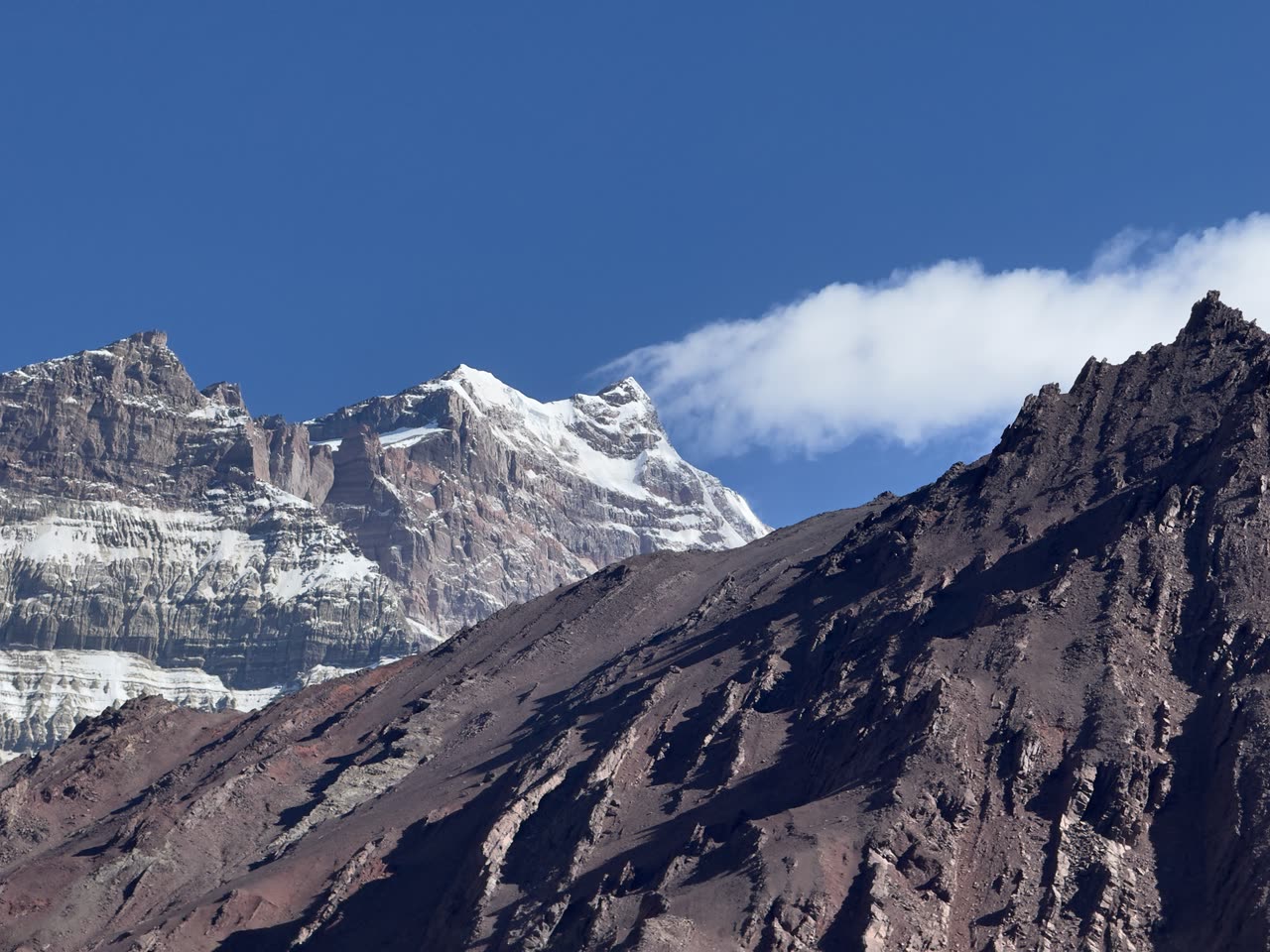
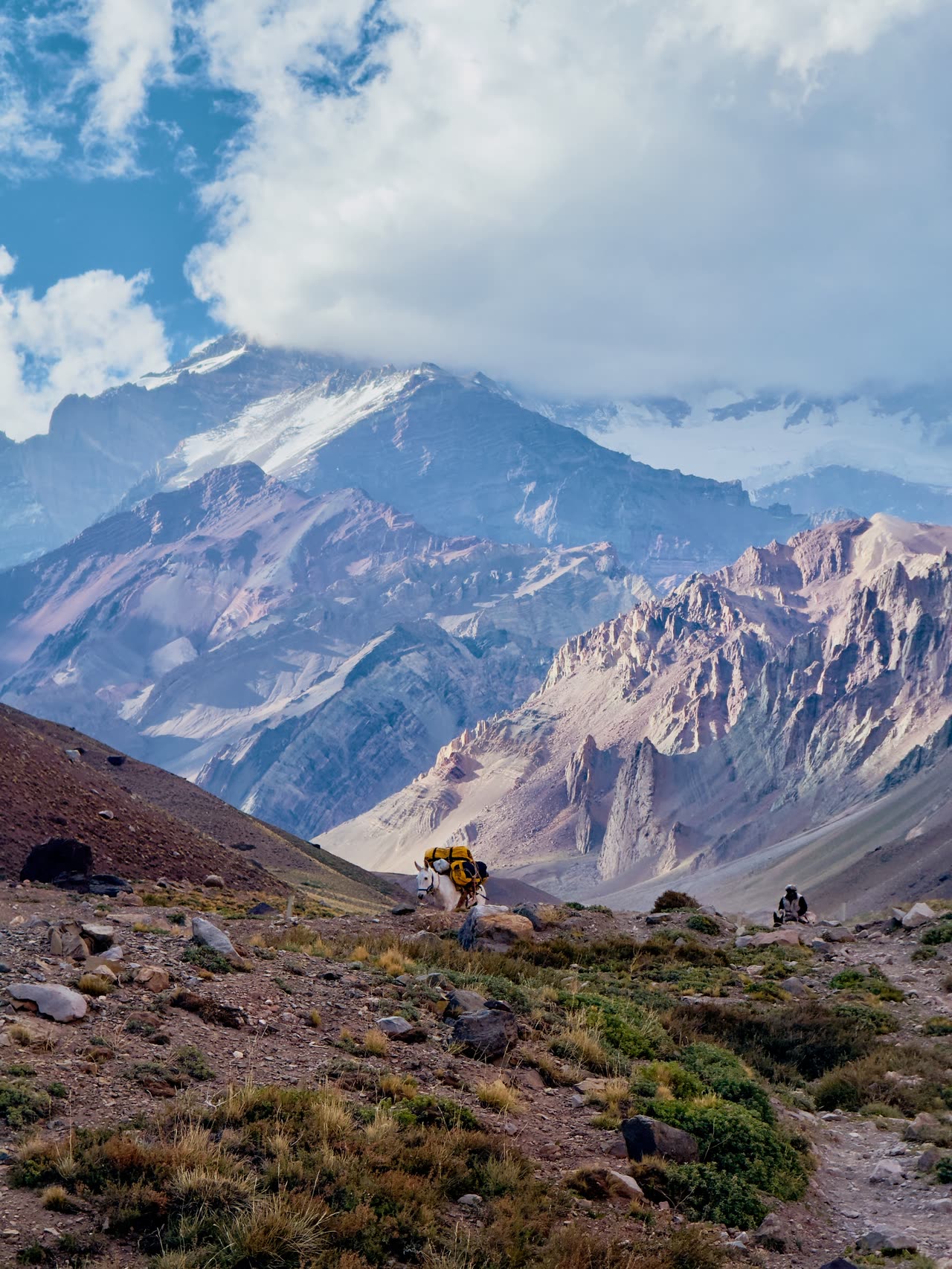
On February 10 we packed up from Confluencia and pushed on to Plaza de Mulas at roughly 14,000 feet. The route took us through layered cliffs, narrow canyons, and then into the broad dry valley. Mules carried the heavier loads, and by afternoon we reached camp.
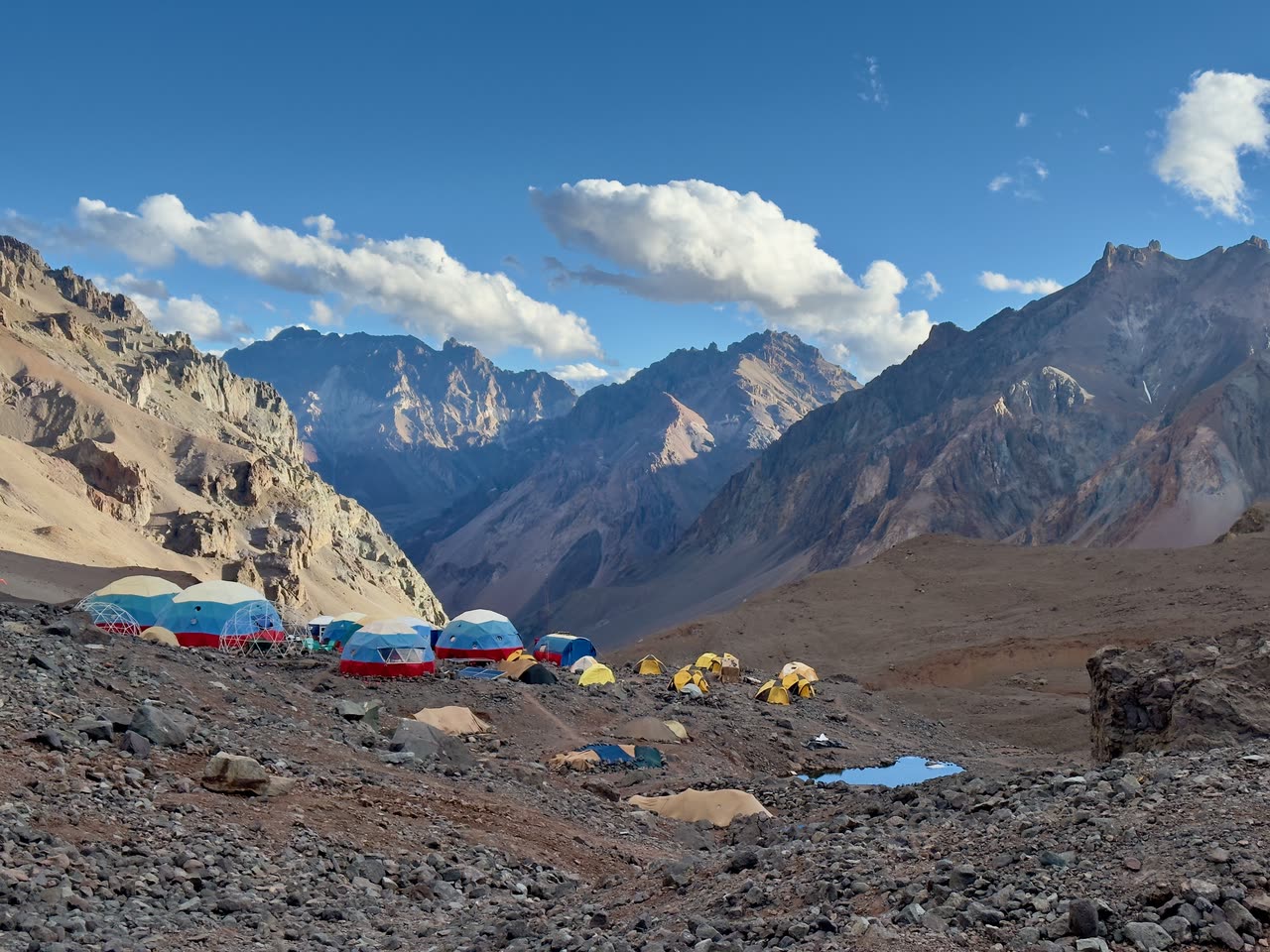
Base camp felt like a small city of tents on a gravel plateau below the north side of Aconcagua. The food was better than expected, we had helicopter supply drops, and the night sky was unreal. We also did an acclimatization hike toward Bonete Peak and started settling into life above 14,000 feet.
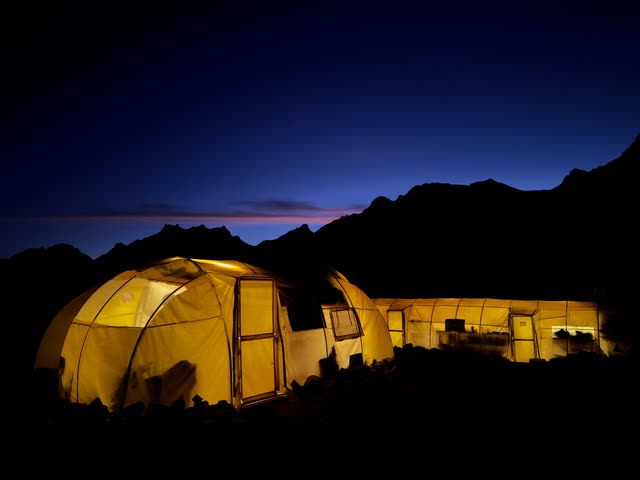
~14,400 ft · Base camp at twilight, yellow tents glowing from within.
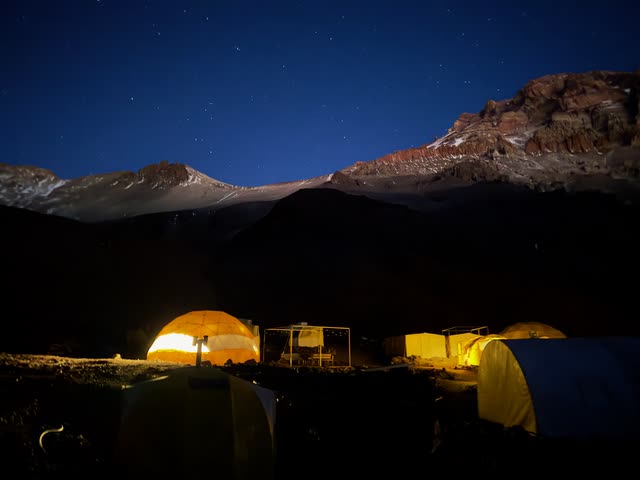
Base Camp · Stars over base camp. Hard to stop looking up.
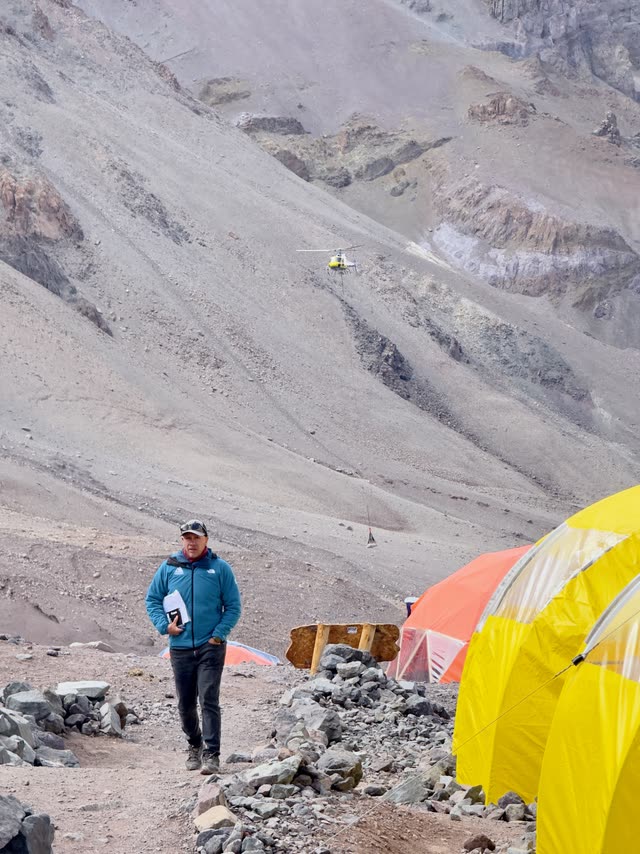
Base Camp · Helicopter supply drop with fresh food and fuel.
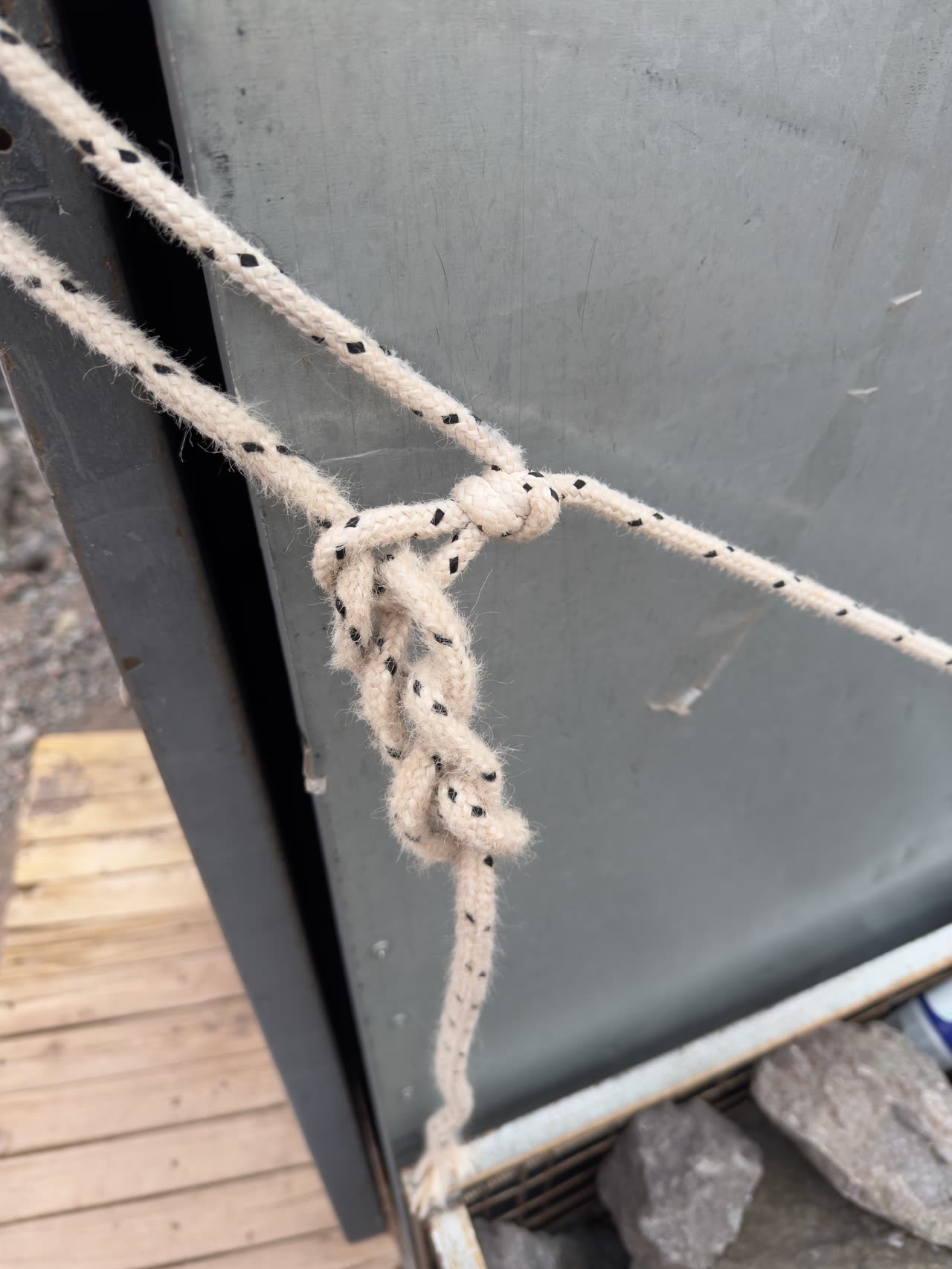
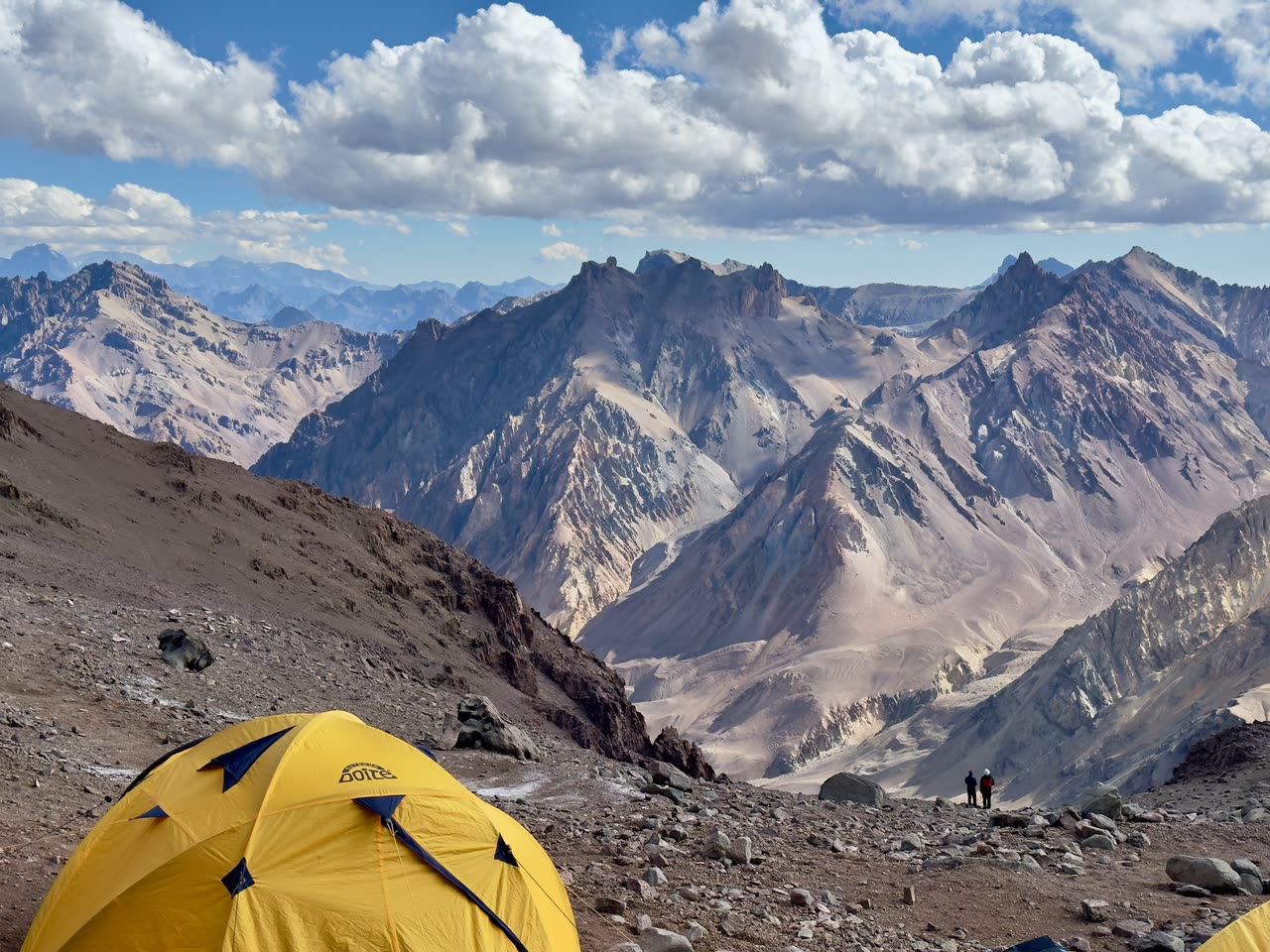
Camp 1 sat around 16,000 feet, and everything got slower. We slept in tents from here on up, and a few of us climbed a nearby rock each evening to watch sunset. Chris was part of this crew and in plenty of these moments.
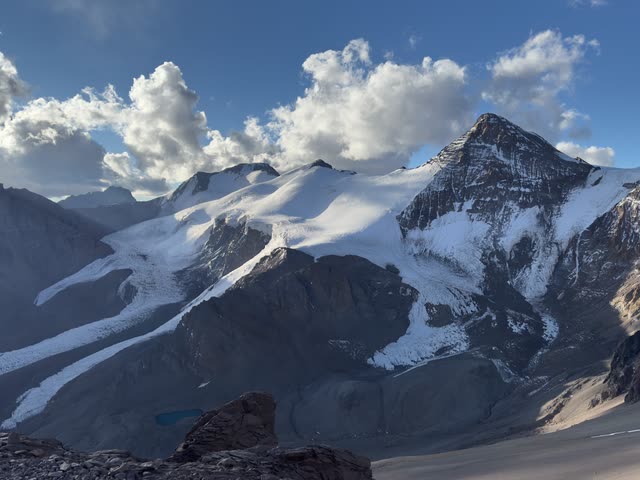
~16,600 ft · Snow-covered faces and glaciers from Camp 1.
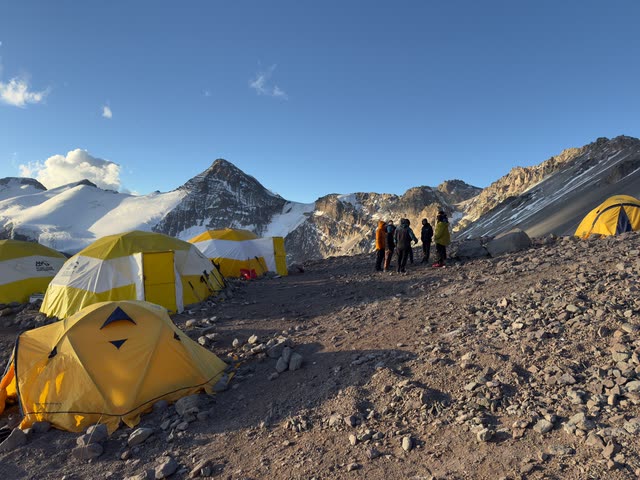
~16,600 ft · Camp 1 in full: tents, gear, and team against the peaks.
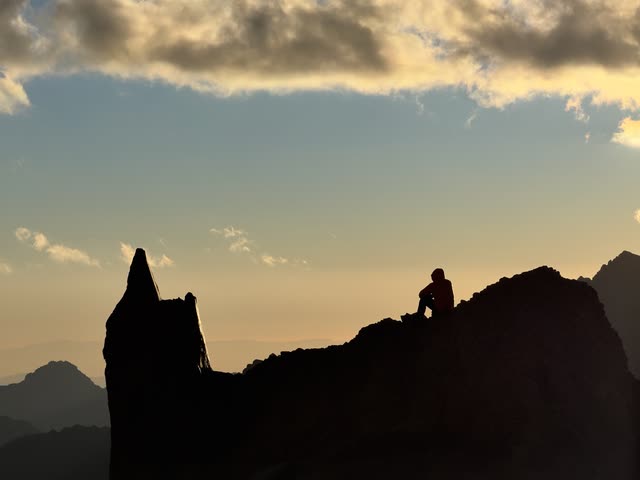
~16,600 ft · Perched above camp, waiting for sunset on the ridgeline.
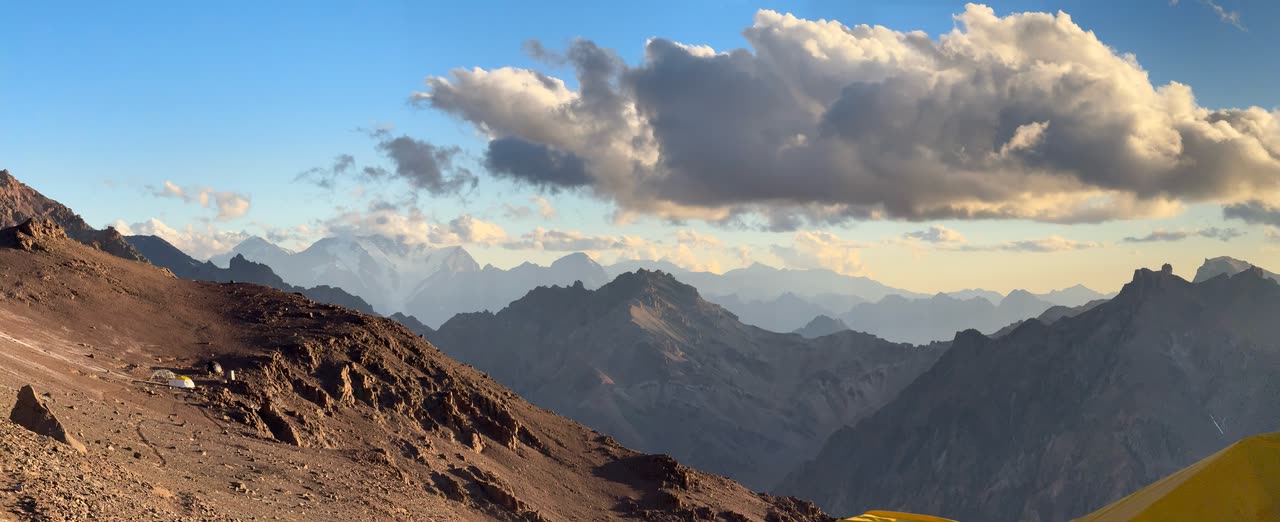
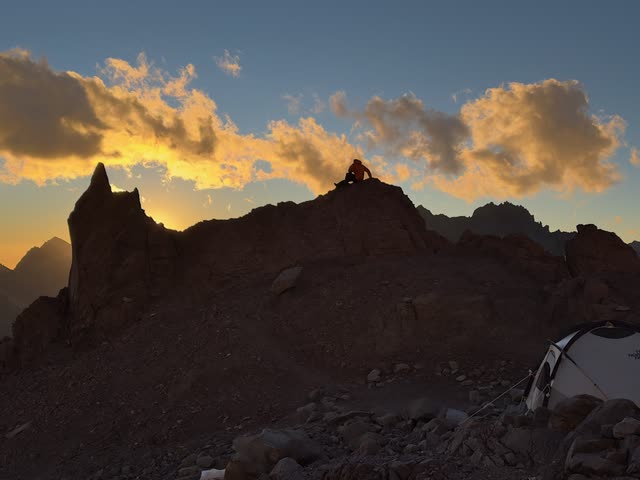
~16,600 ft · Crags in silhouette against a gold sky.
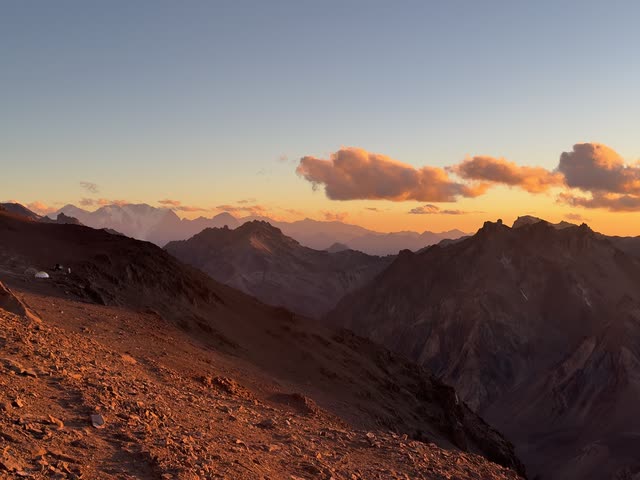
~16,600 ft · Peaks glowing orange and pink as the sun dropped.
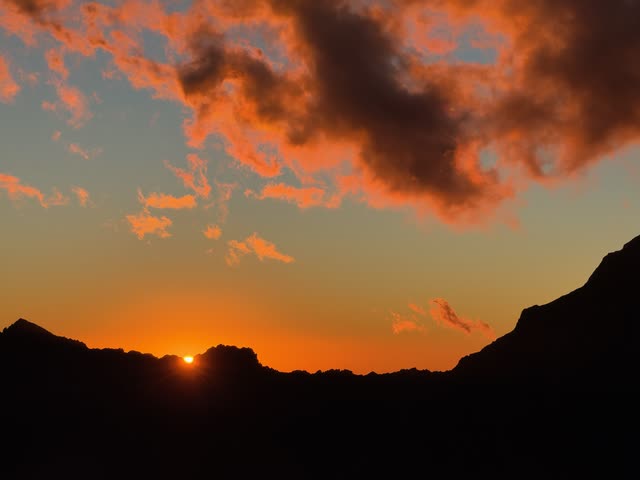
~16,600 ft · The sun touching the ridge behind camp.
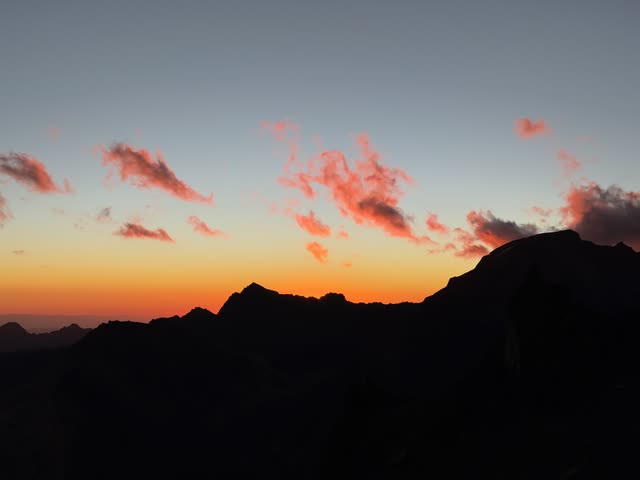
~16,600 ft · Last light over layered ridgelines.
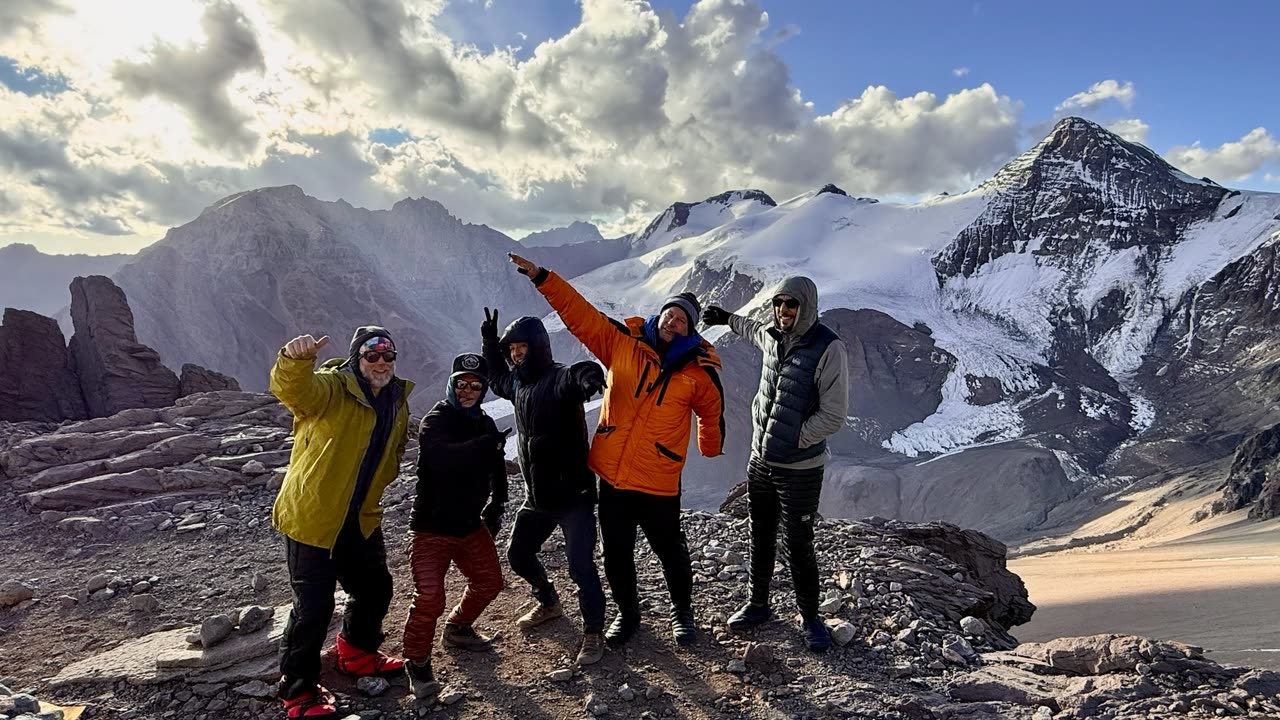
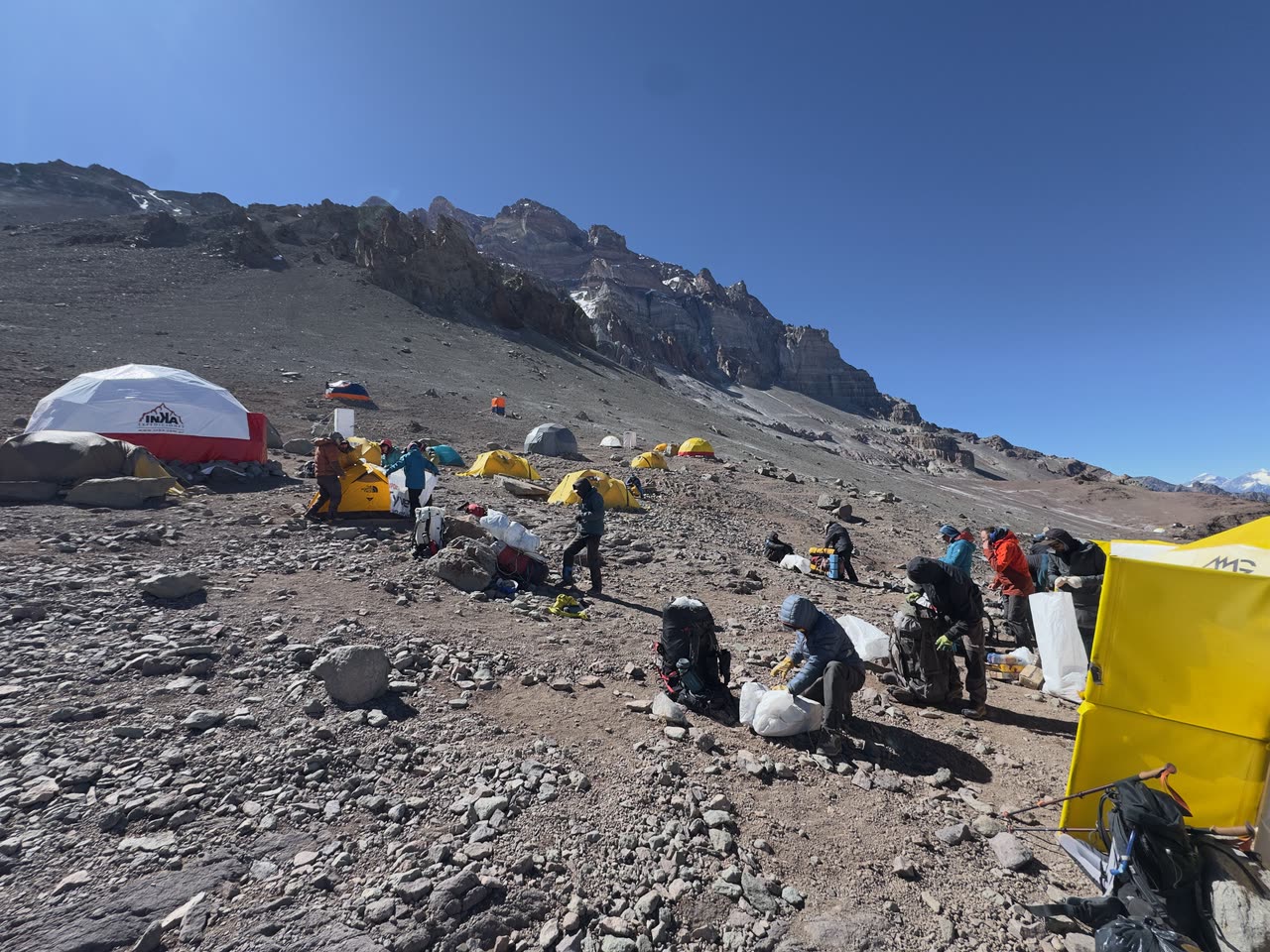
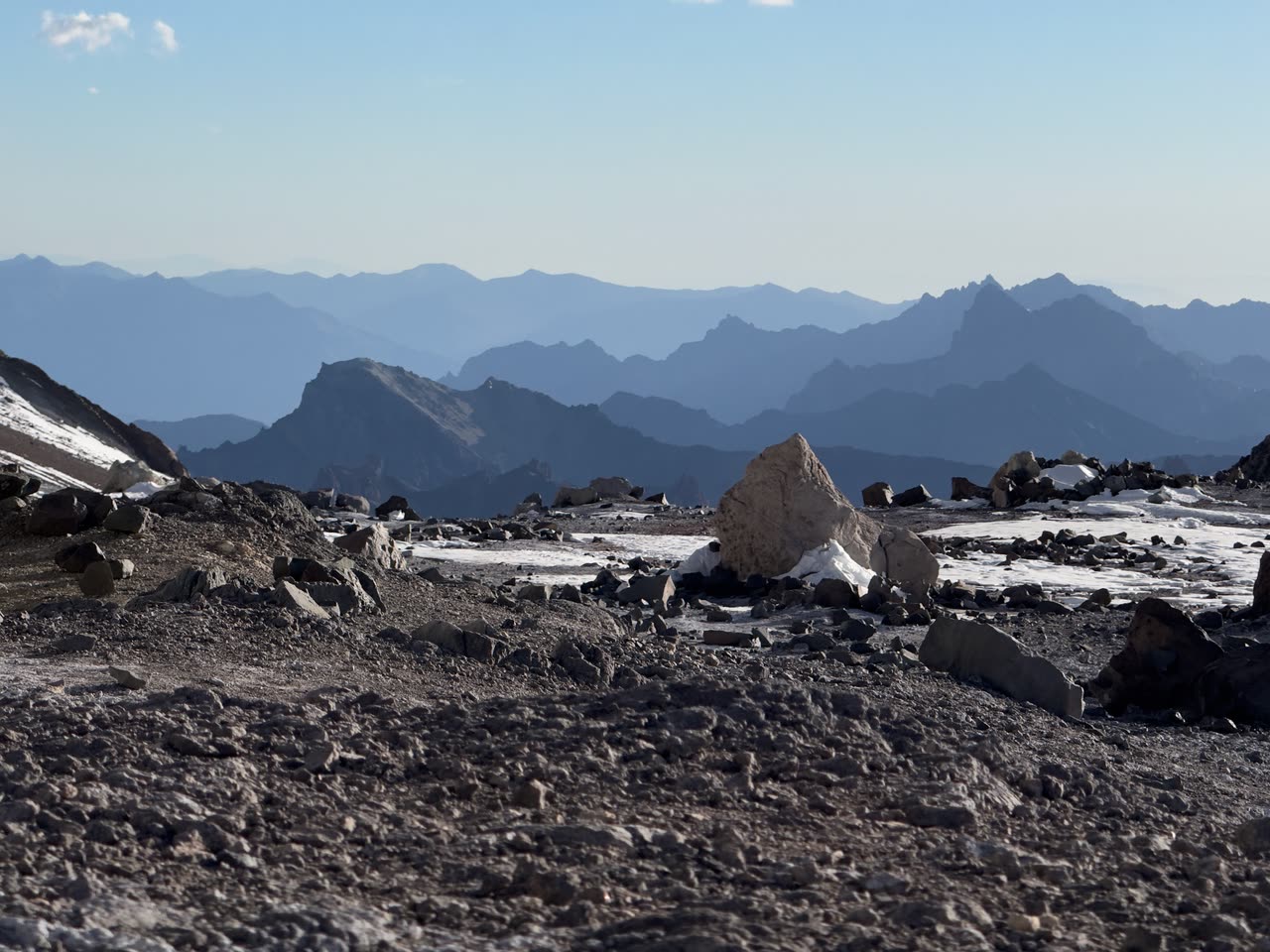
The next morning we packed up and climbed to Camp 2 at 18,200 feet. From there we could stare straight into the upper mountain, still roughly 4,000 feet below summit.
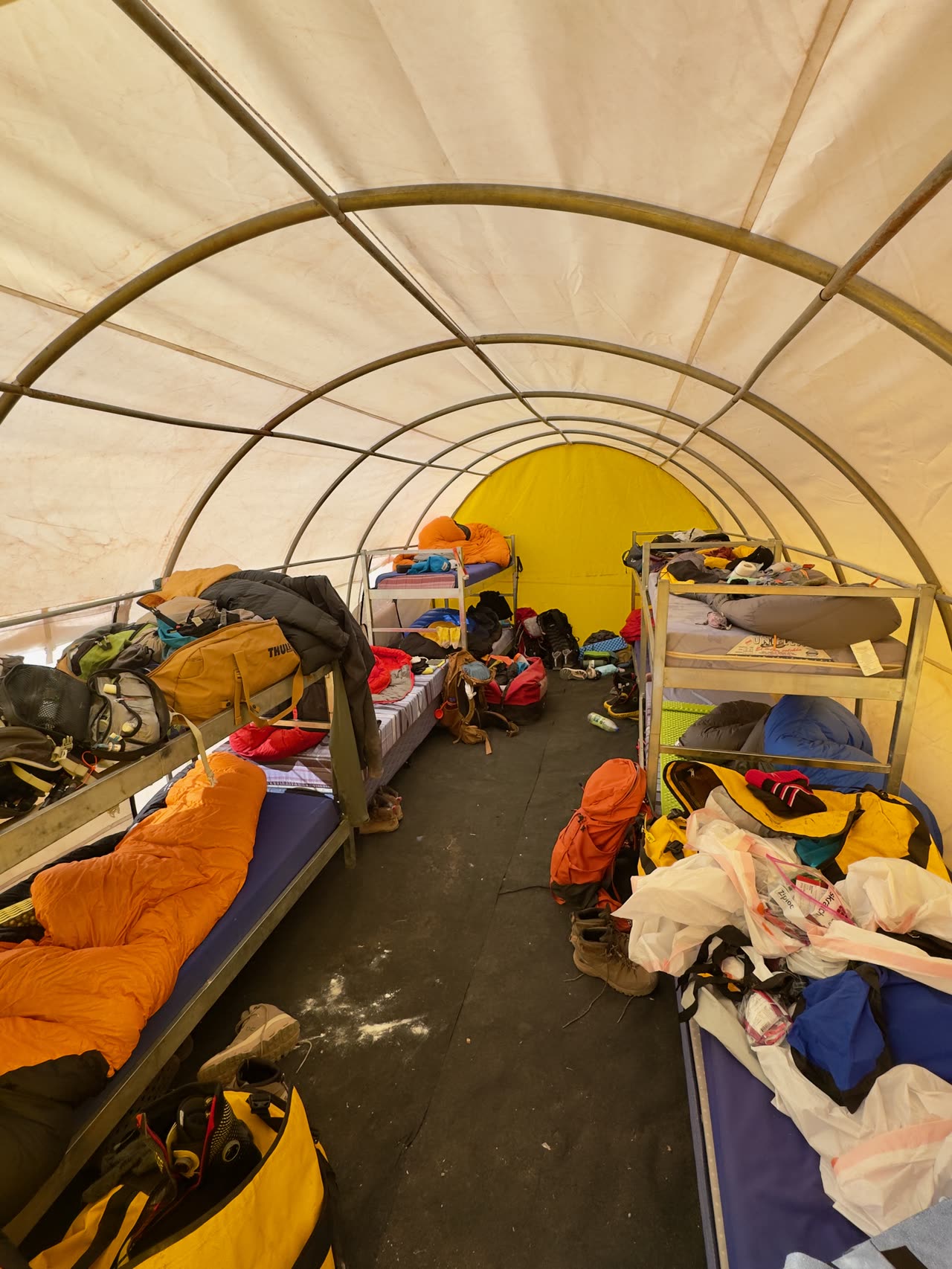
Then weather took over. We spent four days pinned at Camp 2 while wind tore across the ridge and supplies slowly thinned out. We did some exploration walks around the perimeter of camp, but mostly we were waiting. Ruben and Victor spent hours each day melting snow for water and cooking meals, and they were getting tired too. We pushed to go higher, but the guides were wearing down along with the rest of us. We kept checking forecasts for a window that never really came.
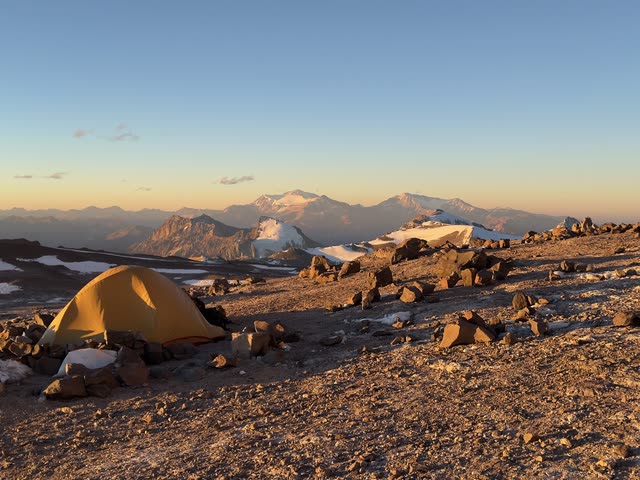
~18,200 ft · Our Camp 2 tent, tucked between the rocks.
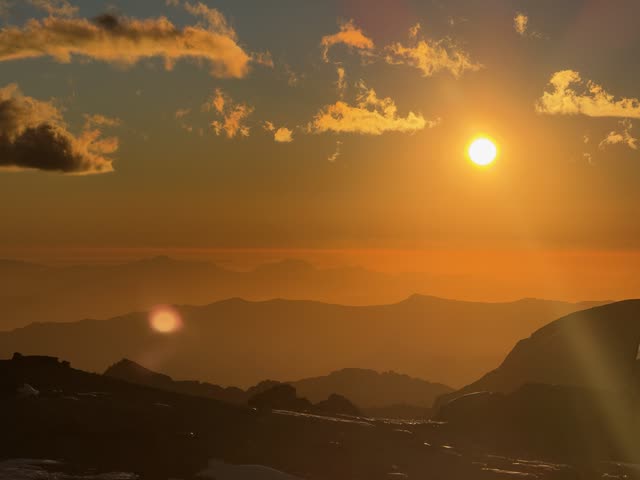
~18,200 ft · Hazy sun over jagged peaks. Long way from Mendoza.
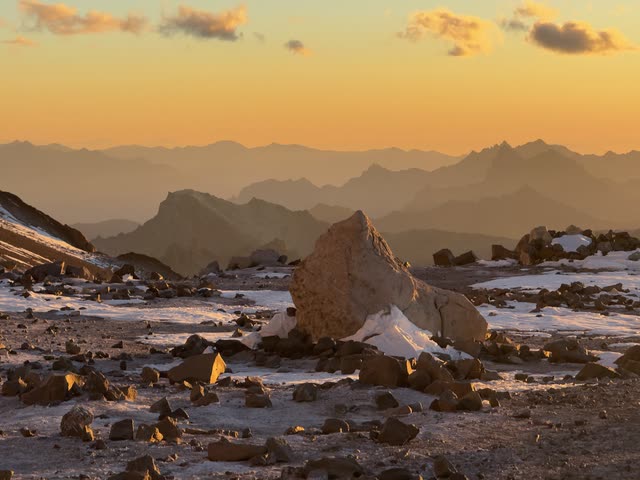
~18,200 ft · Looking down-valley from a high rocky ledge at sundown.
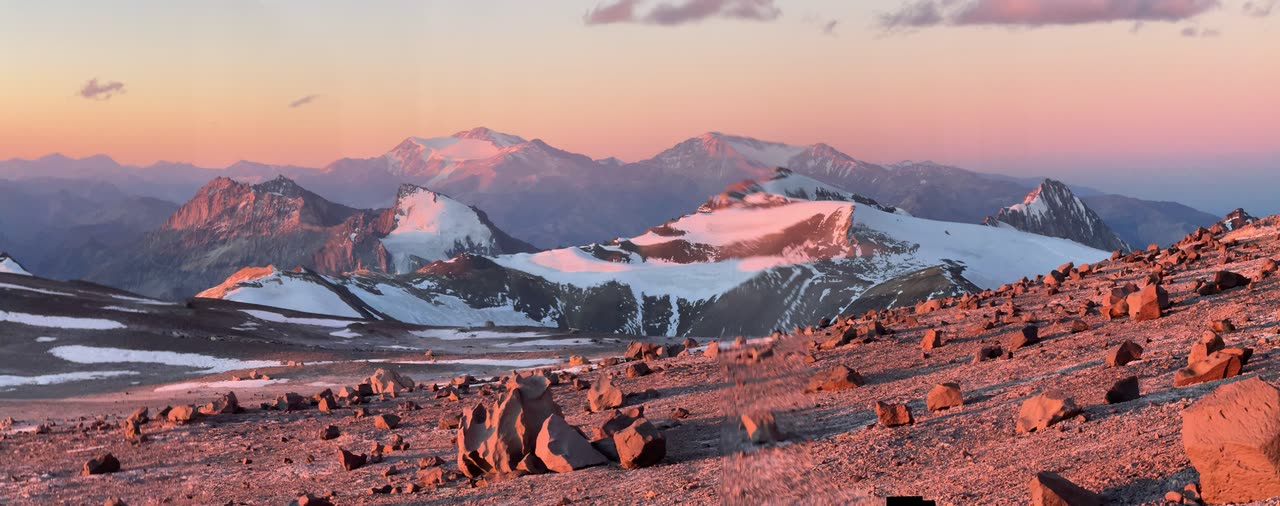
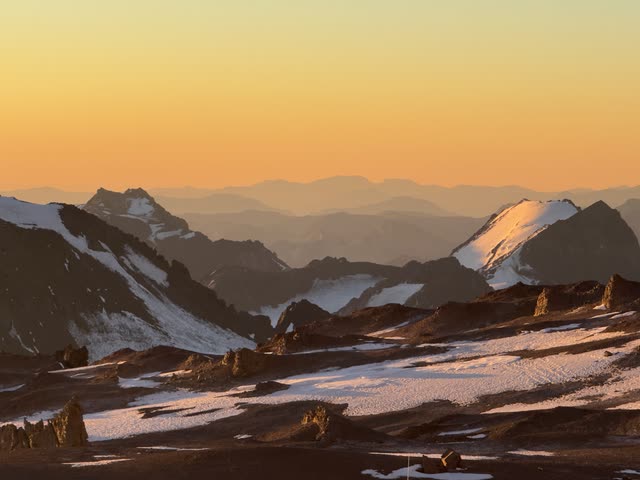
~18,200 ft · Distant peaks in last light while we watched forecasts and waited.
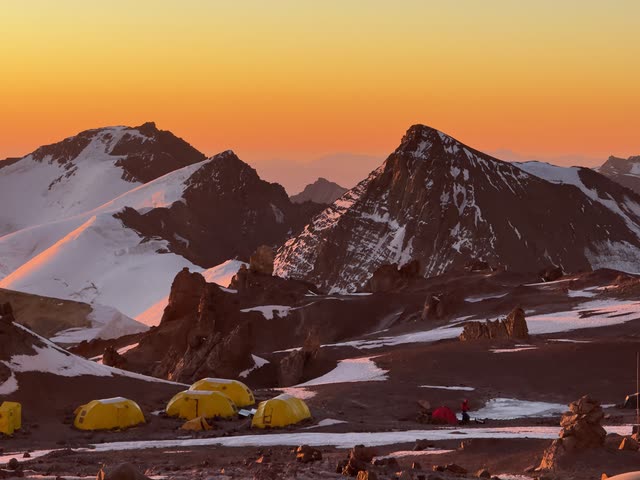
~18,200 ft · Camp 2 tents at sunset: beautiful and fully exposed.
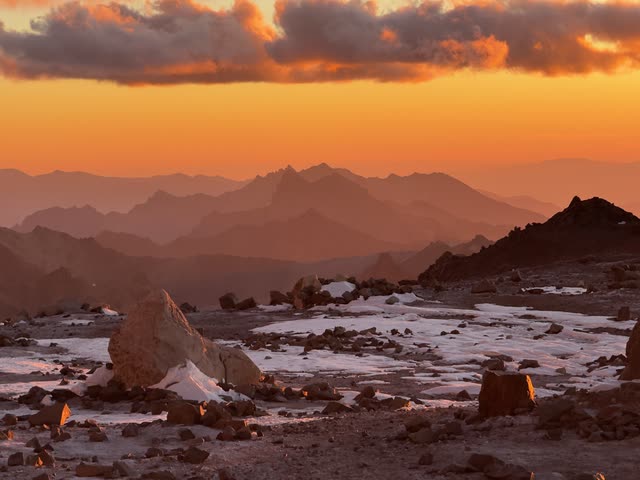
~18,200 ft · Crags lit orange at golden hour.
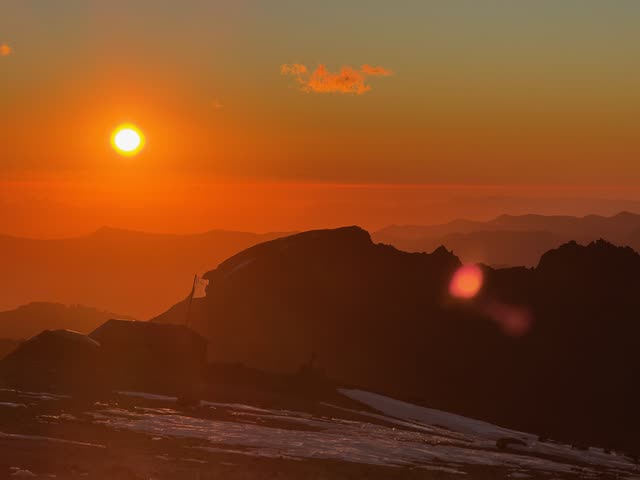
~18,200 ft · Sun flare over camp. Home for four windy days.
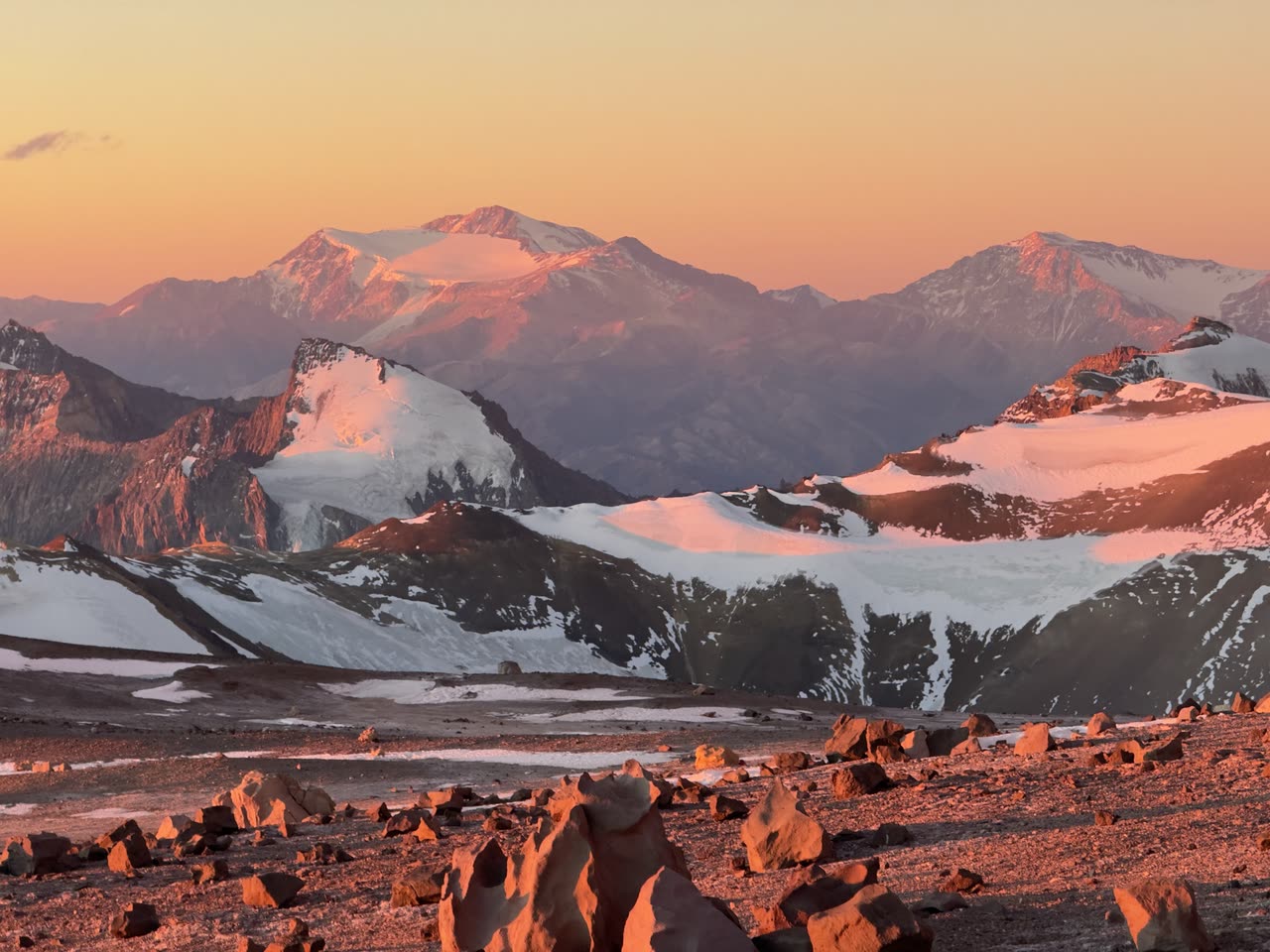
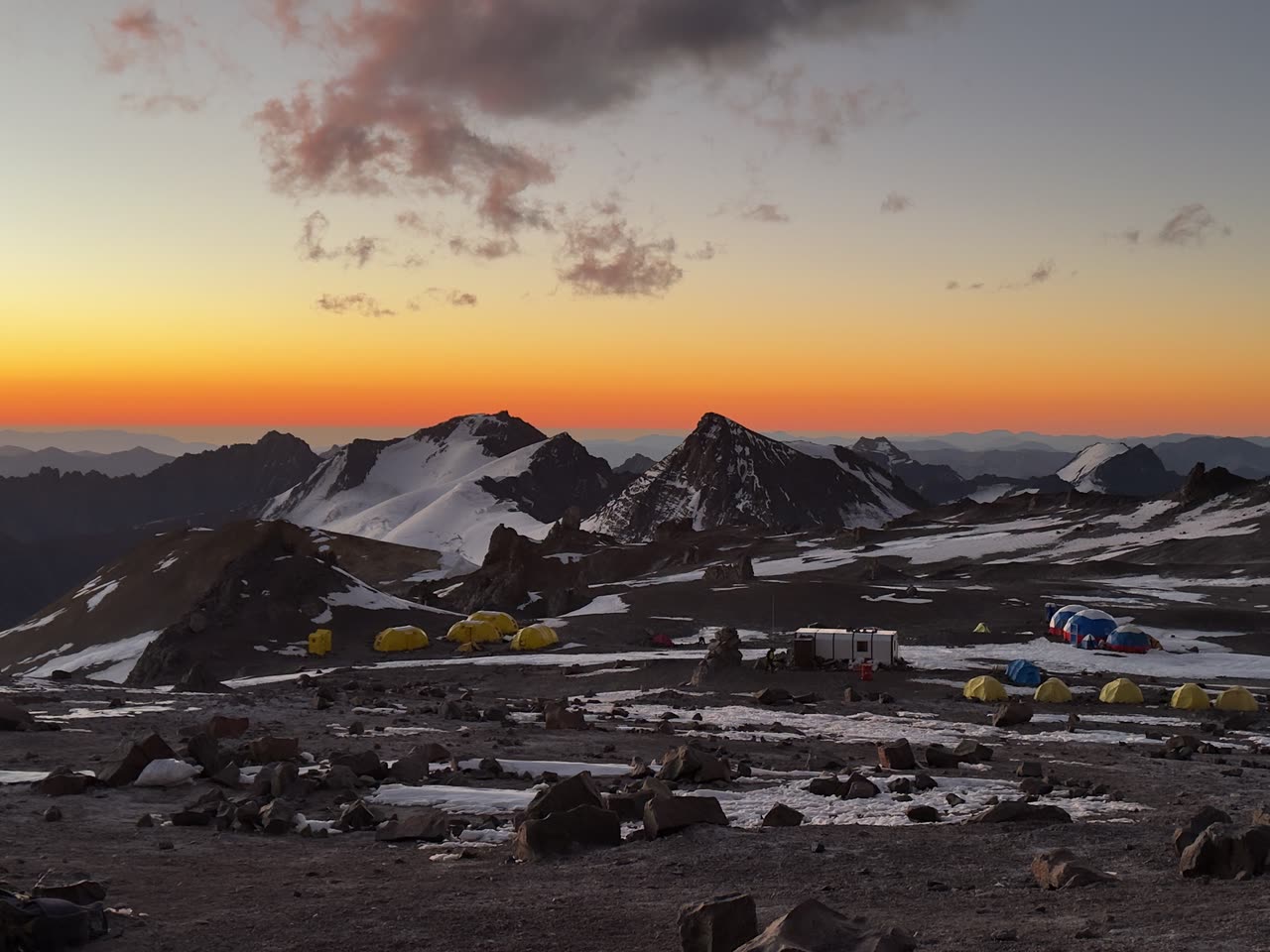
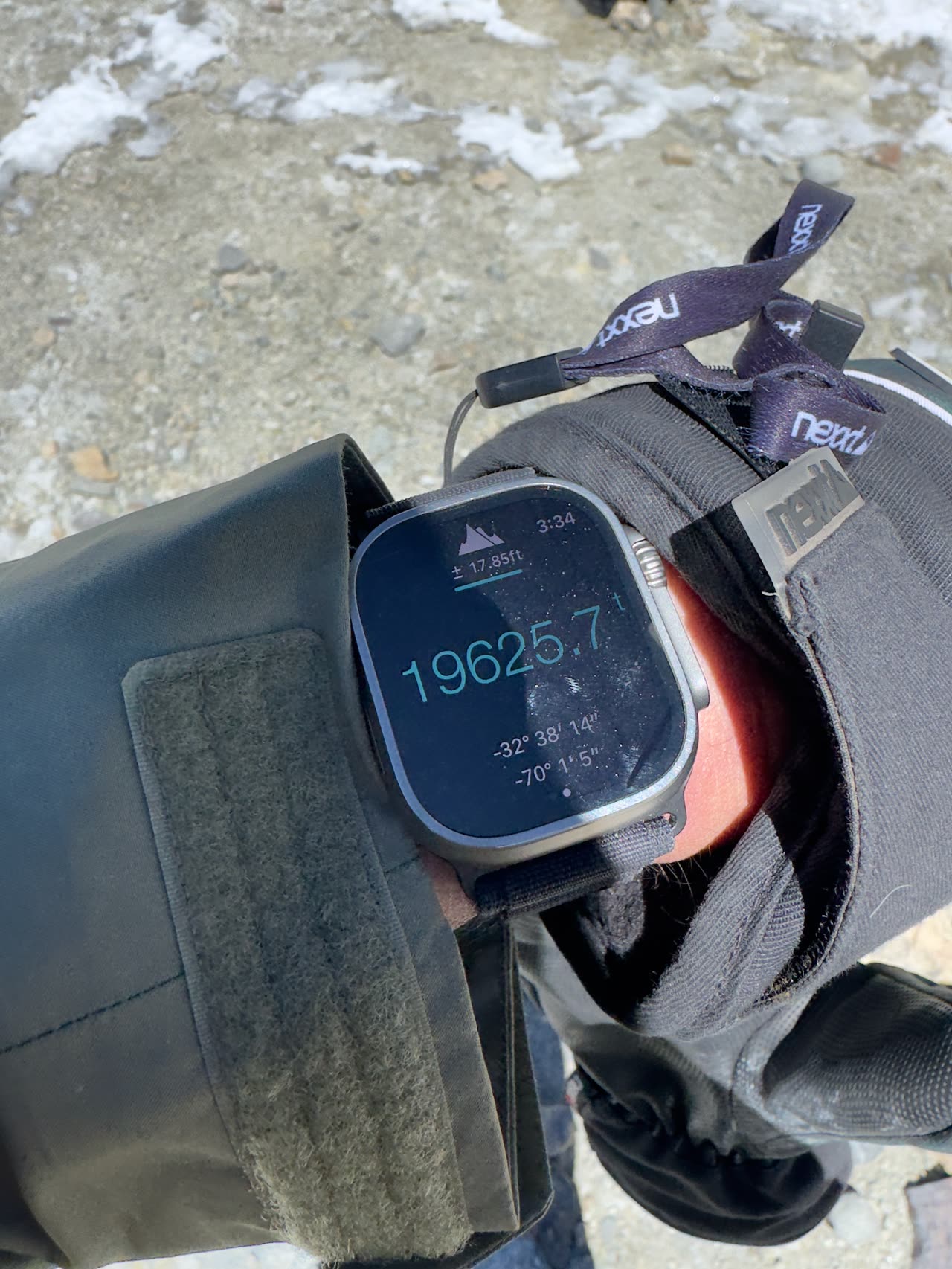
We moved up to Camp 3 at 19,600 feet hoping weather would turn in our favor. For a short stretch, it looked possible.
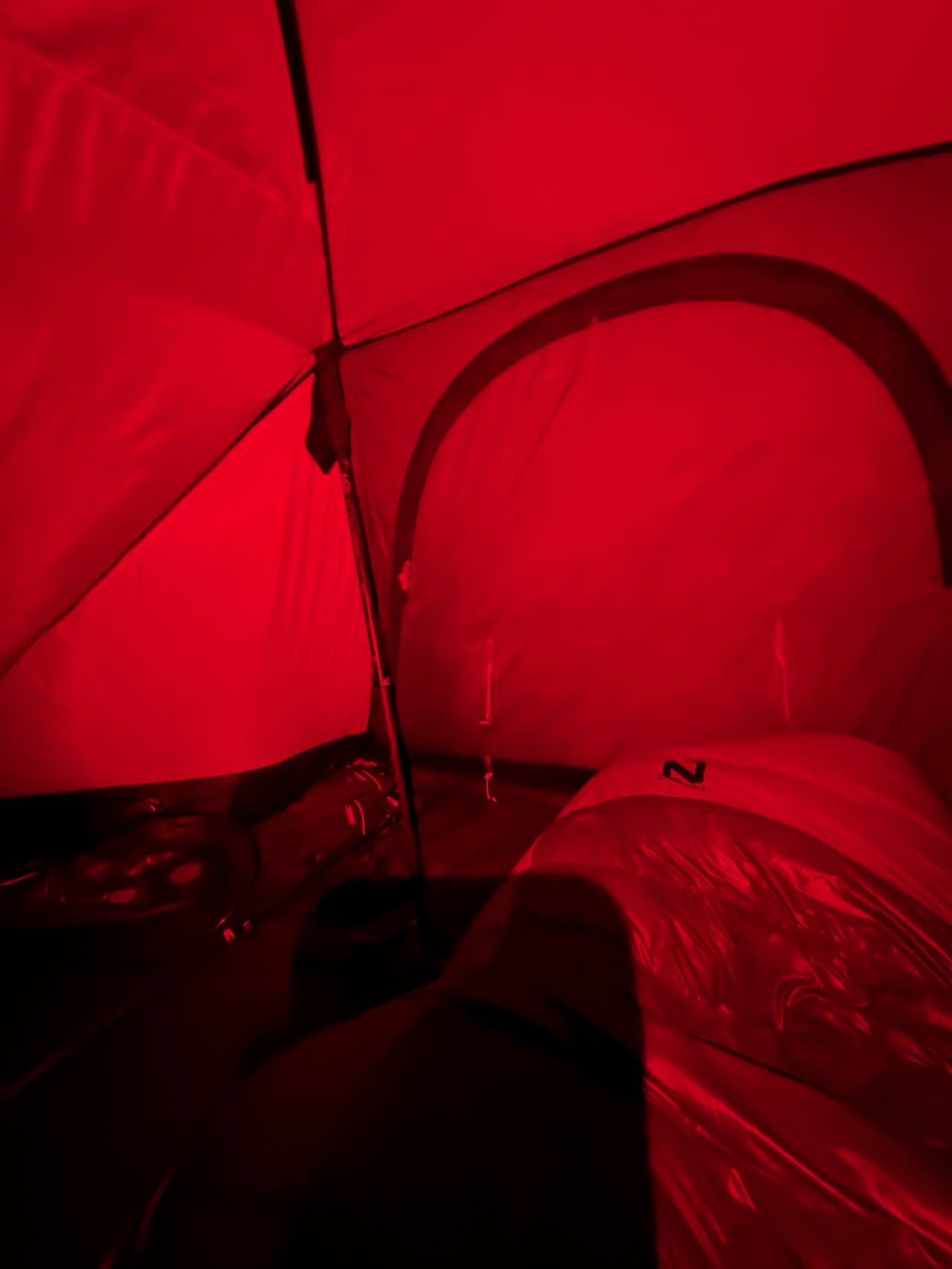
Then around 5:00 AM the wind hit 120 to 130 km/h. I braced my tent poles from the inside trying to steal a little more sleep, but the poles snapped and the tent folded onto me. Juan moved through camp stacking rocks on flattened tents so they would not blow away.
I stayed inside longer than I should have because I did not want to step into 10 F air and hard gusts before dawn. By morning we were out of margin: low on food, low on energy, and no safe weather window. We called it and started down, likely about two days early for the next weather opening.
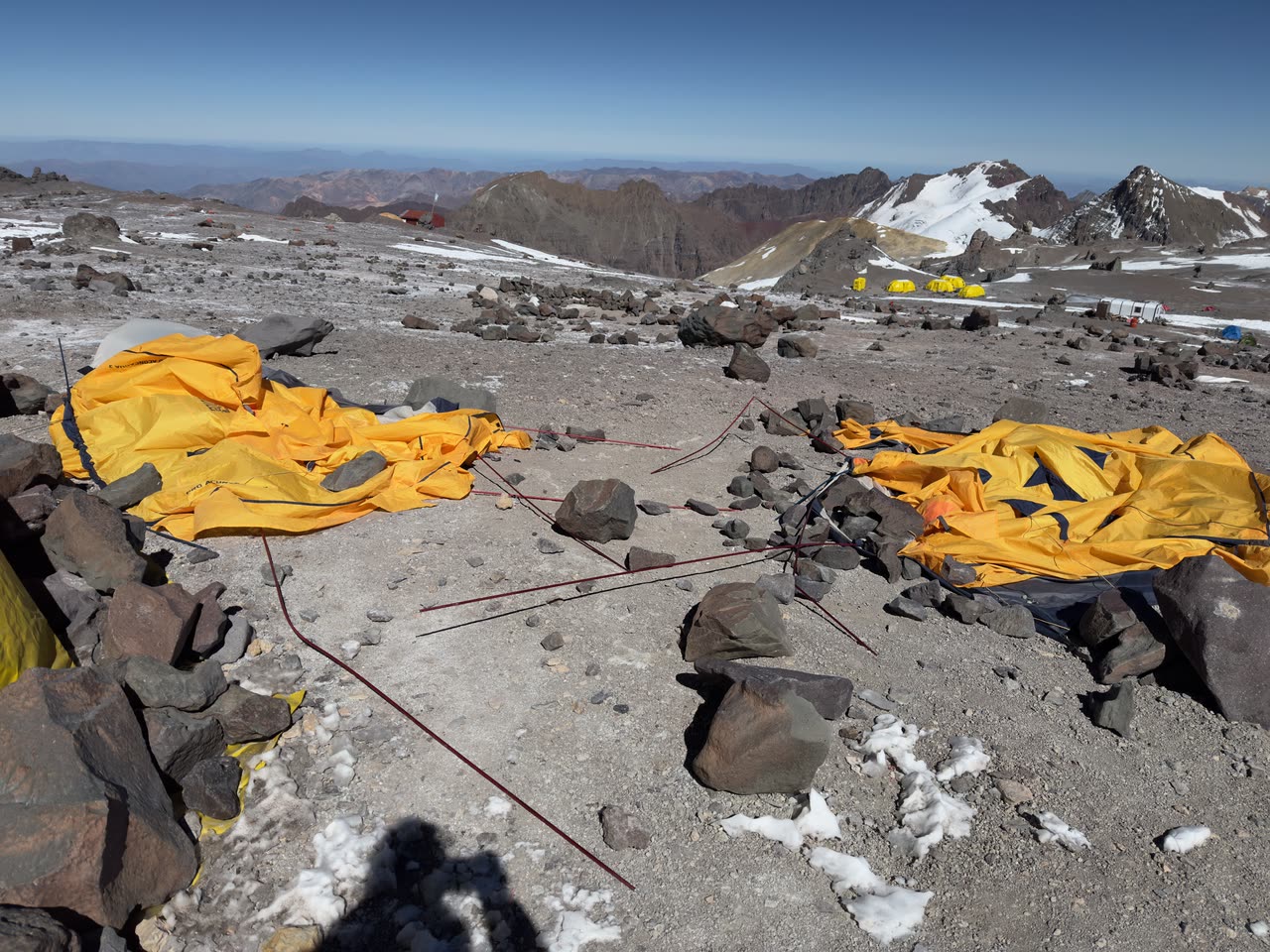
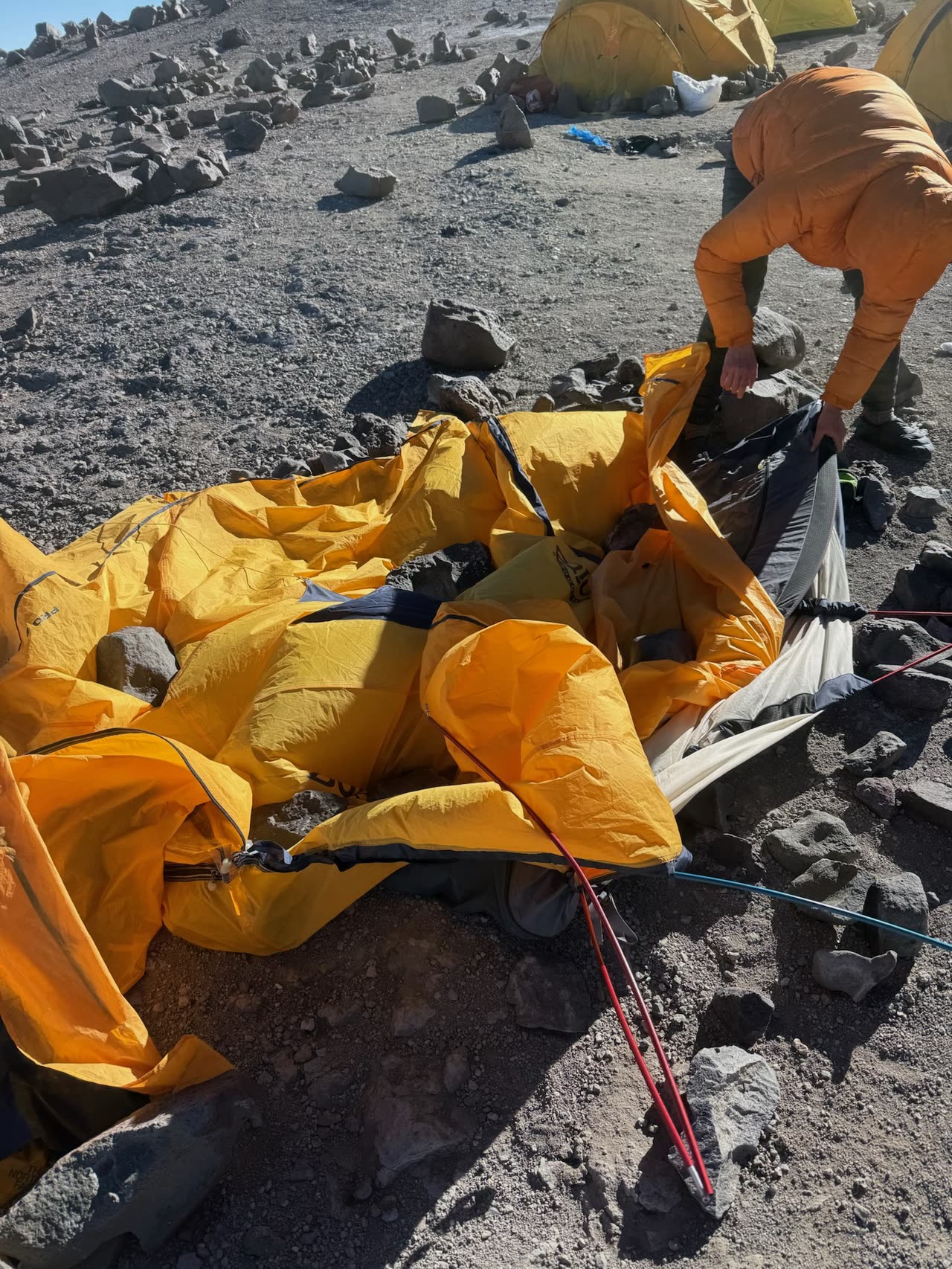
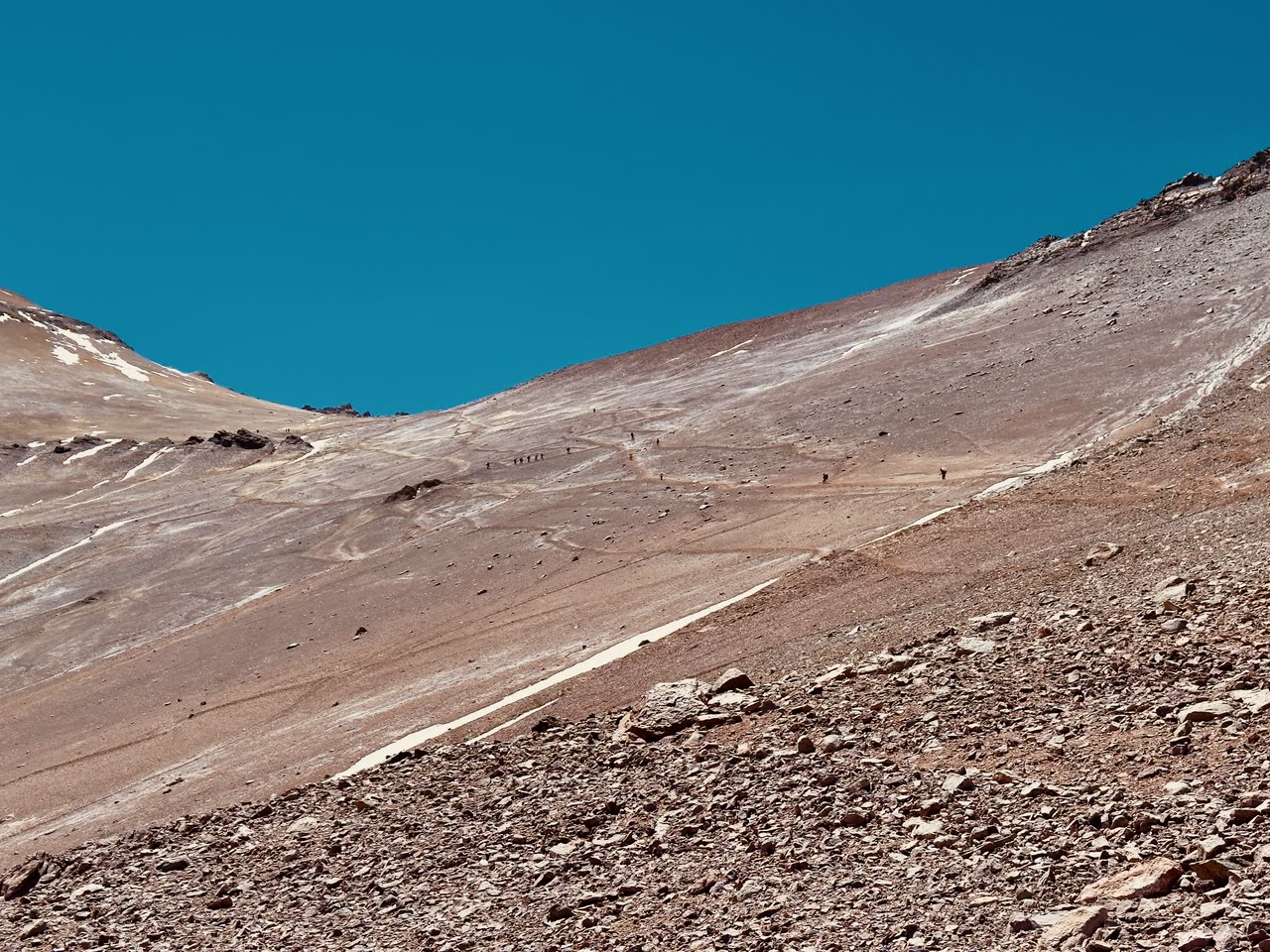
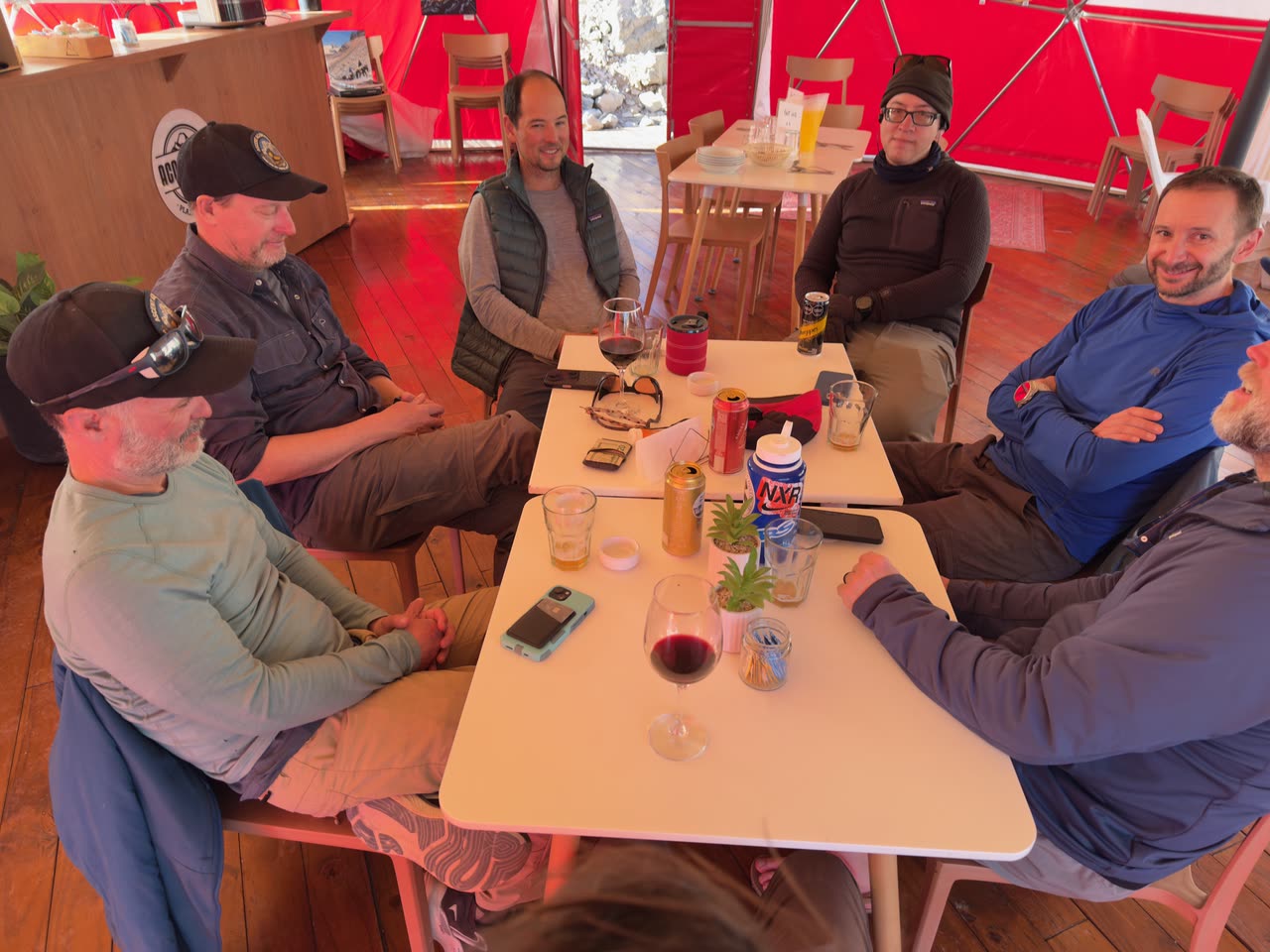
Turning around was the right call, but it still stung. Doug dug gear out of a flattened tent, we packed what survived, and dropped through long scree fields back to base camp—doing a lot of scree skiing on the way down. We still climbed to nearly 20,000 feet without supplemental oxygen. We had avoided wine and alcohol the entire trip, so that night we finally shared a glass and started processing what we had just been through.
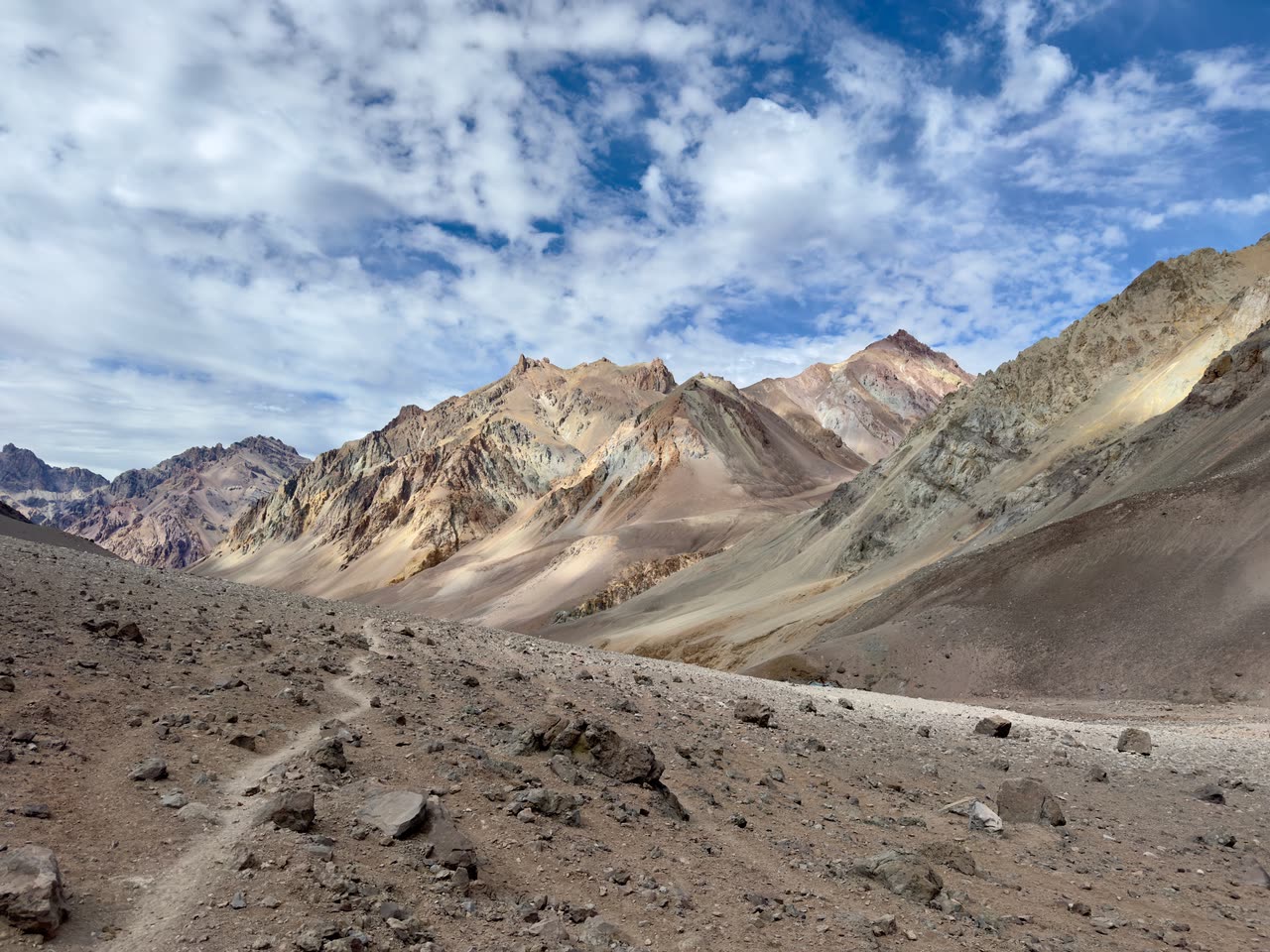
The walk from base camp back to the park entrance ended up being one of my favorite days. On the way in we were focused on the objective and fighting headwind. On the way out the wind eased, we walked with it, and I could actually take in the landscape.
~12,400 ft · Looking over the valley, still hard to process the scale.
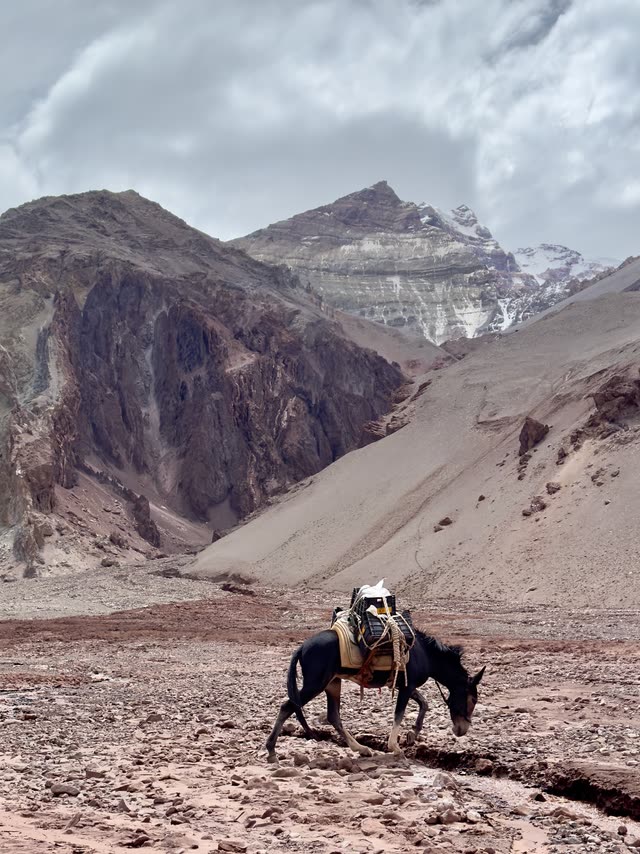
~12,000 ft · Helmet and pack down to watch some more mules pass by Aconcagua's southern face.
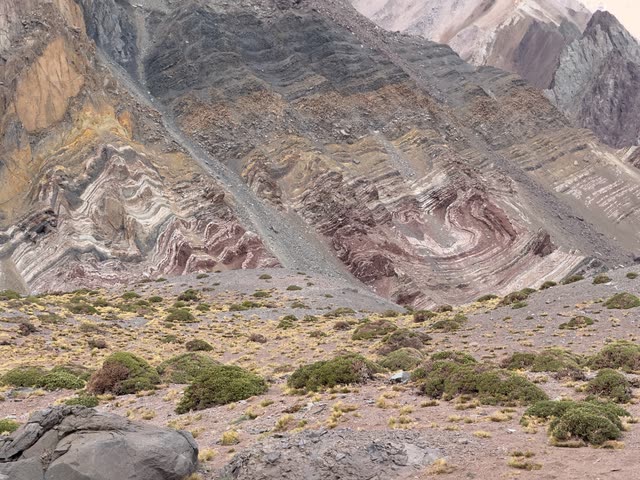
~11,600 ft · Layered rock slopes on the descent.
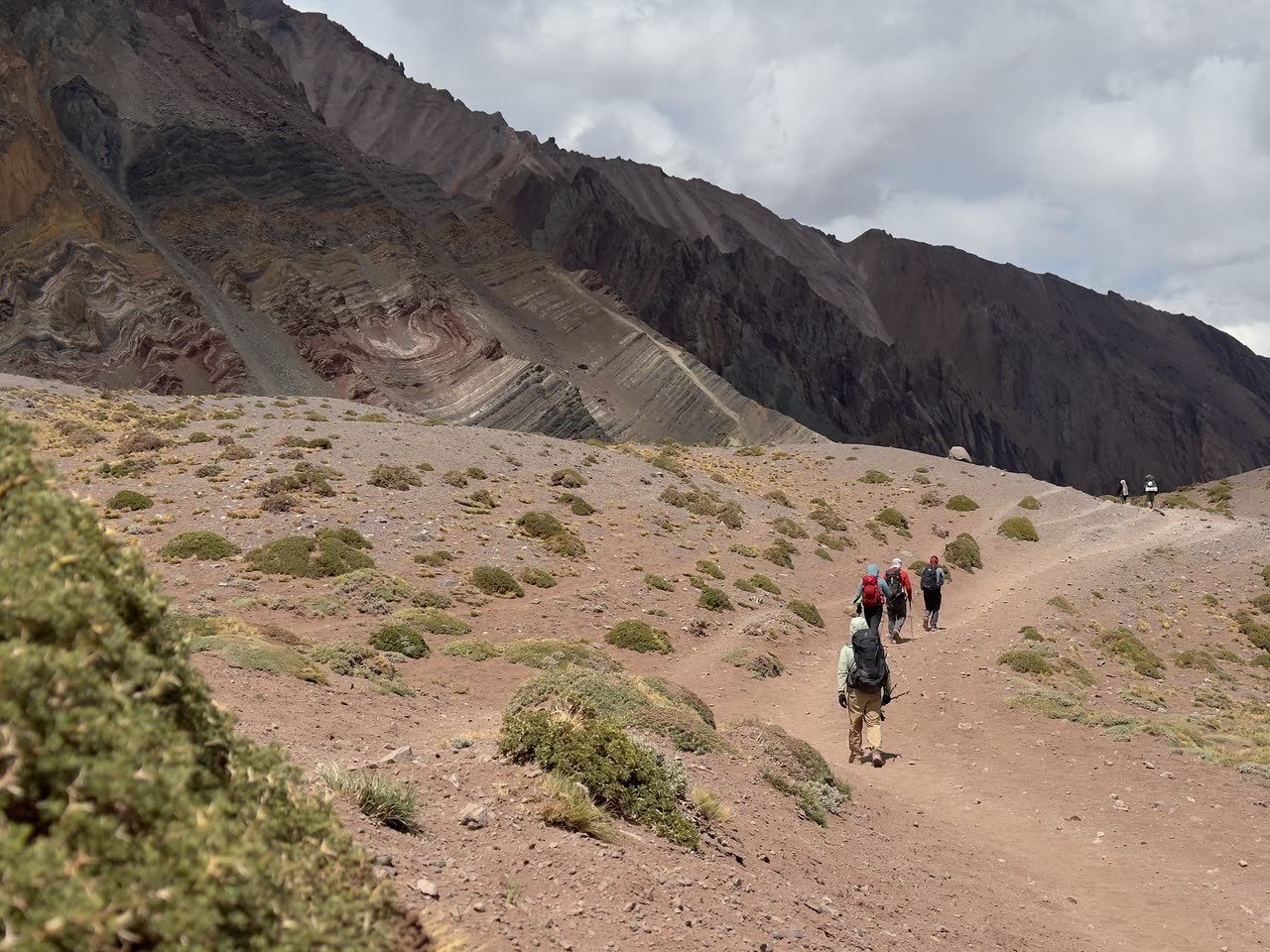
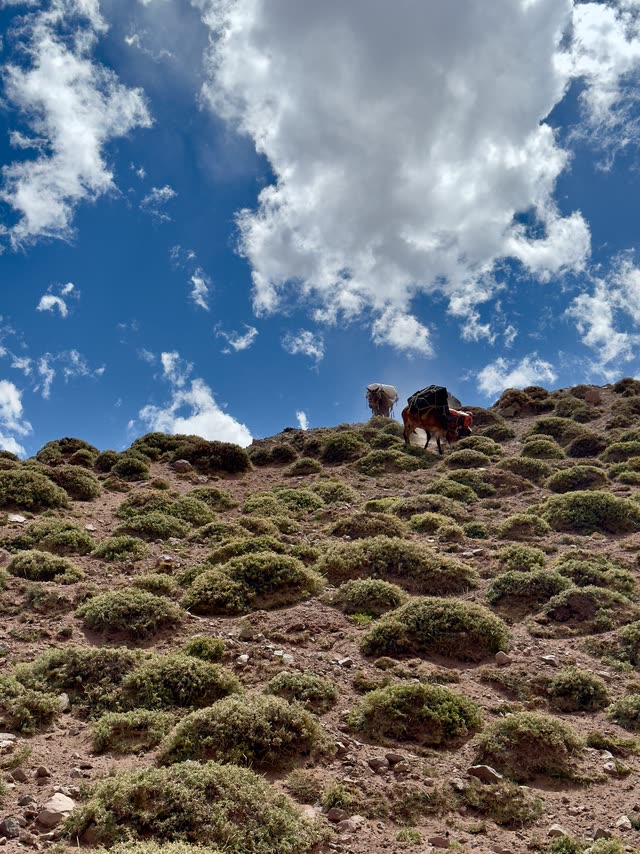
~11,500 ft · Mules grazing on sparse scrub beside the trail.
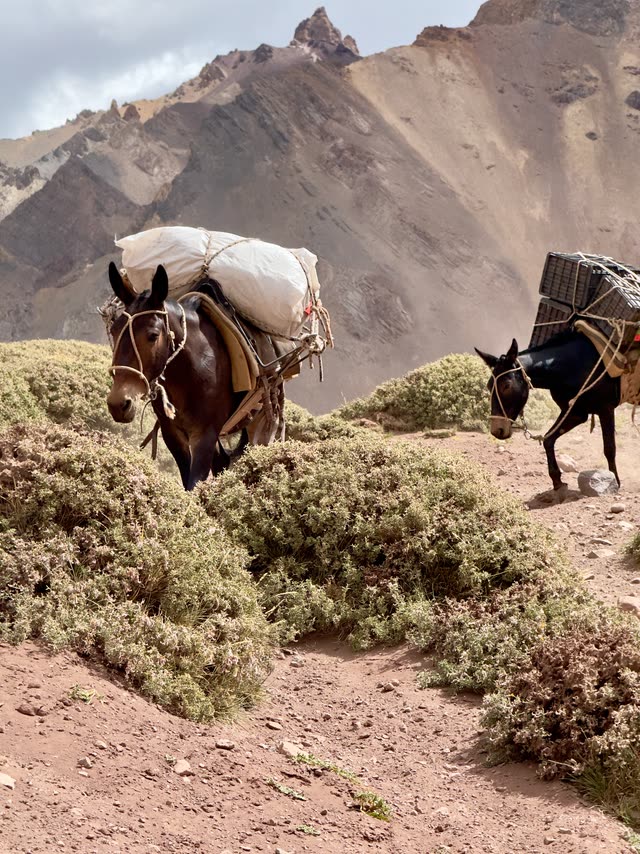
~11,500 ft · Loaded pack mule carrying our gear out, patient and sure-footed.
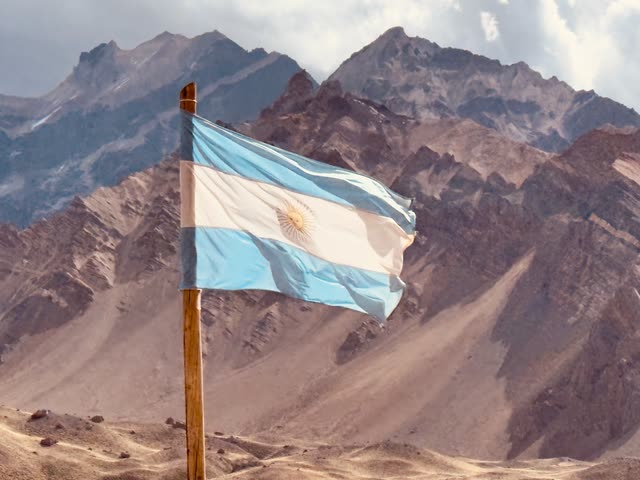
Confluencia · Argentine flag at Confluencia, where we stopped for reception.
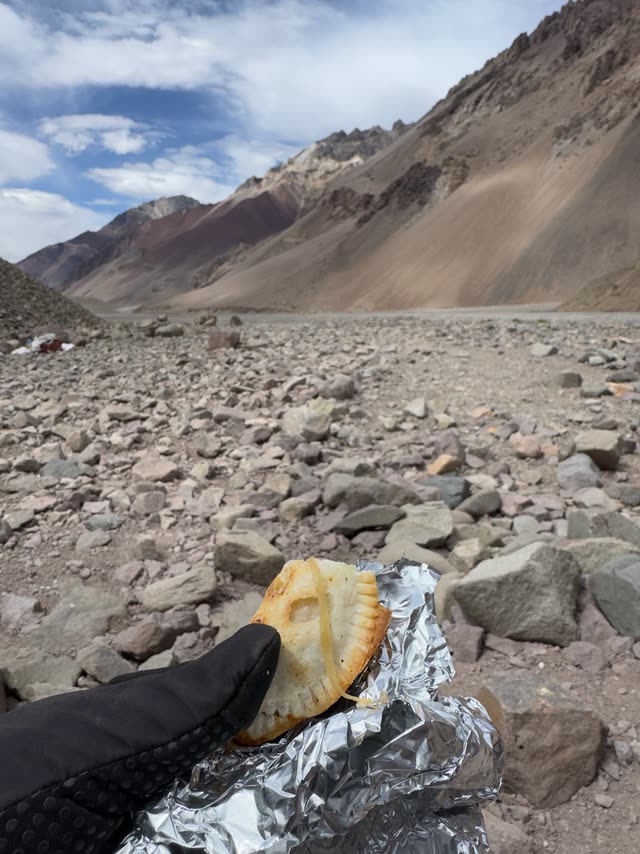
At Confluencia we stopped for another reception: ham, cheese, and very salty olives. It was almost the same spread every time, and we looked forward to it every time. One mule got off line on the way out, and a cabrero had to lasso it back on track. From there it was the final push to the park entrance, with more green returning as we dropped.
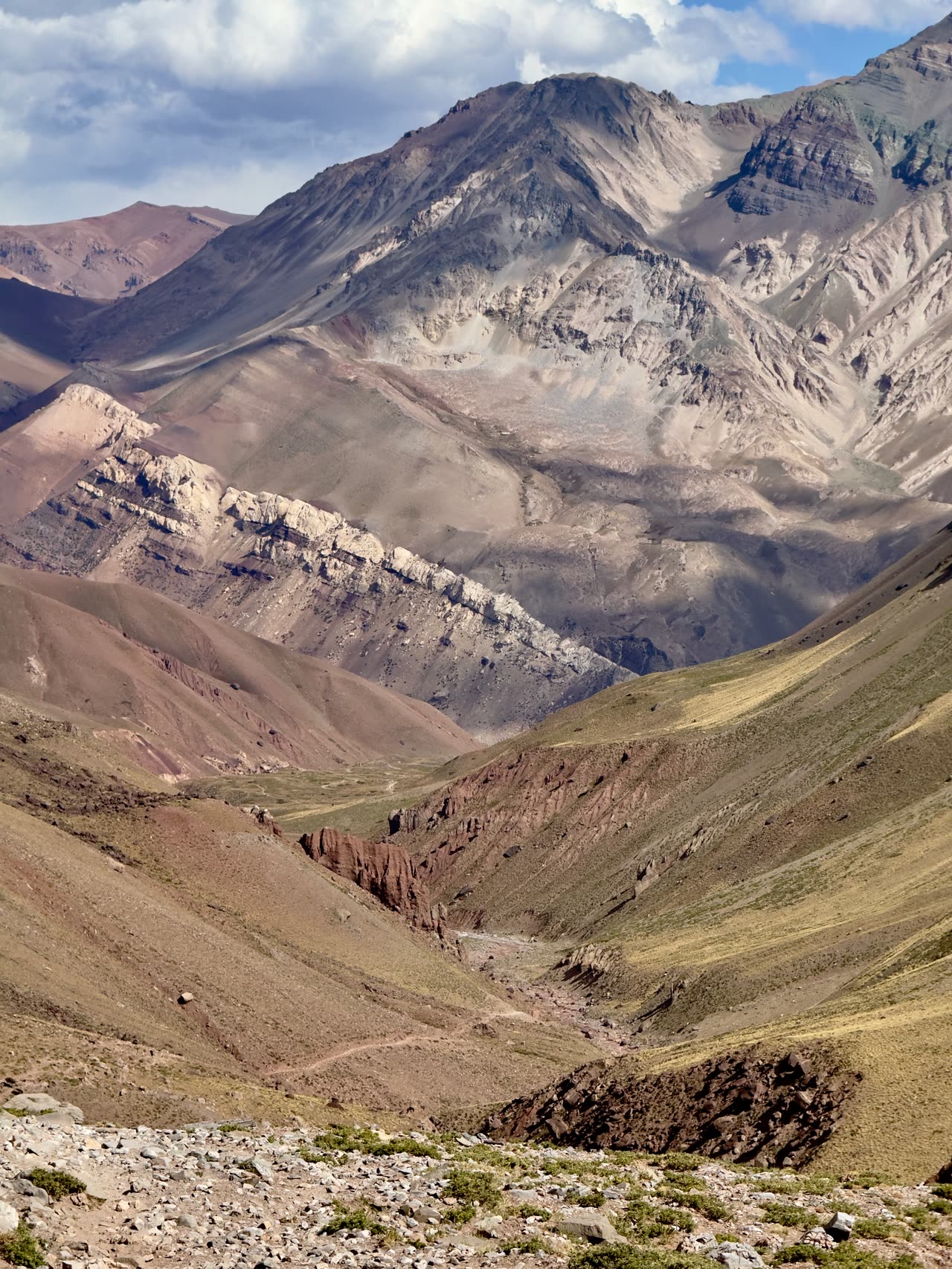
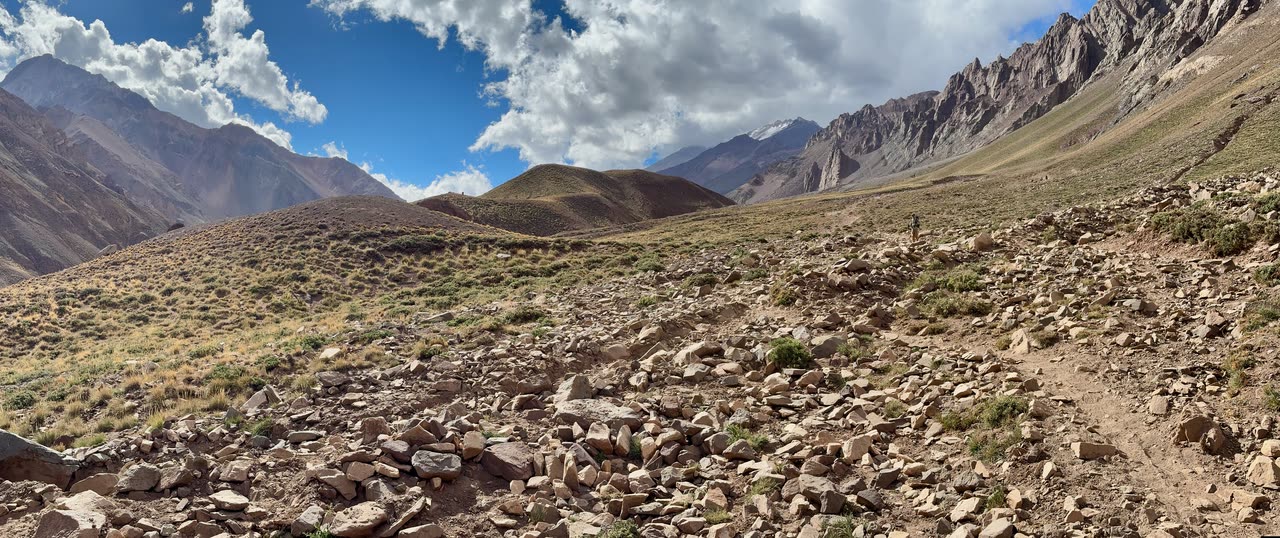
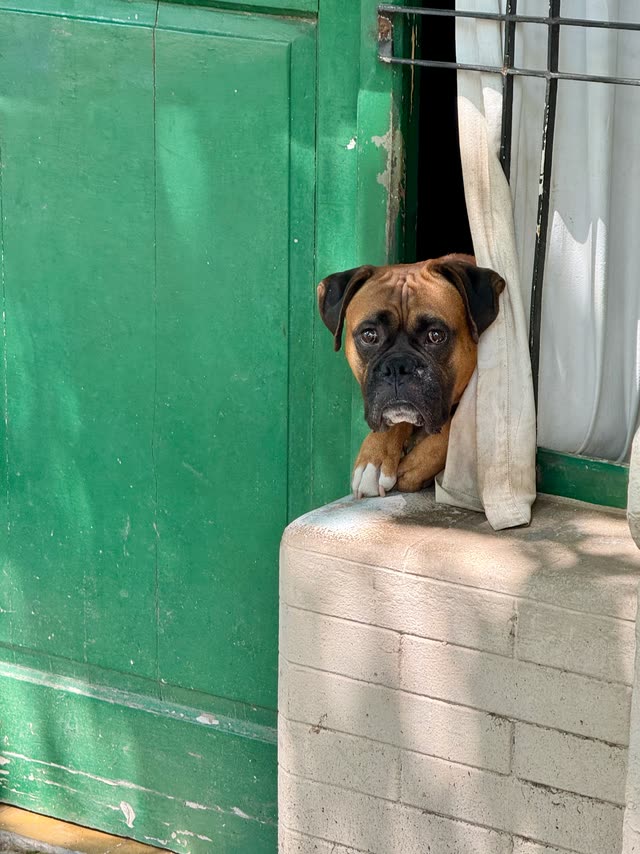
Mendoza · Boxer in a Mendoza window. City life felt surreal after altitude.
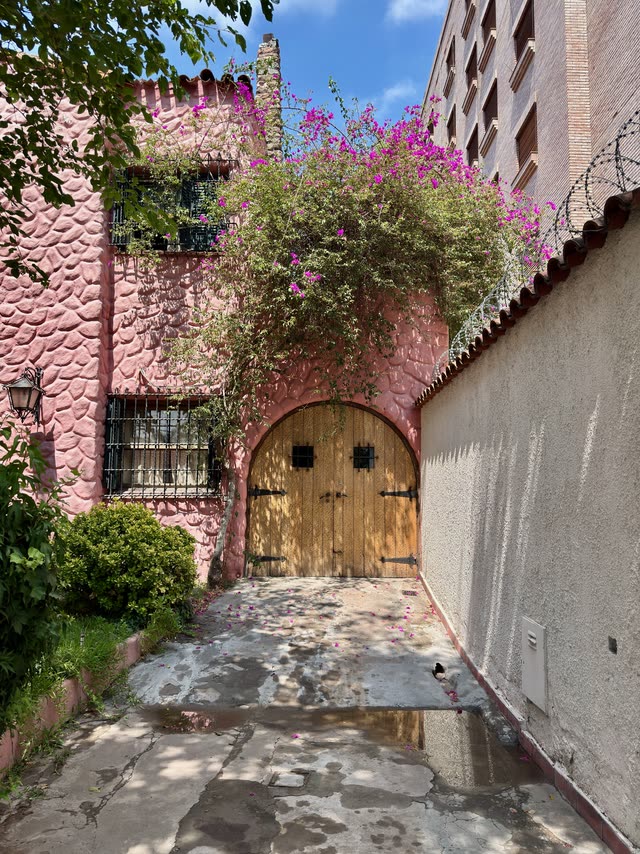
Mendoza · Stone archways and heavy wooden doors in old Mendoza.
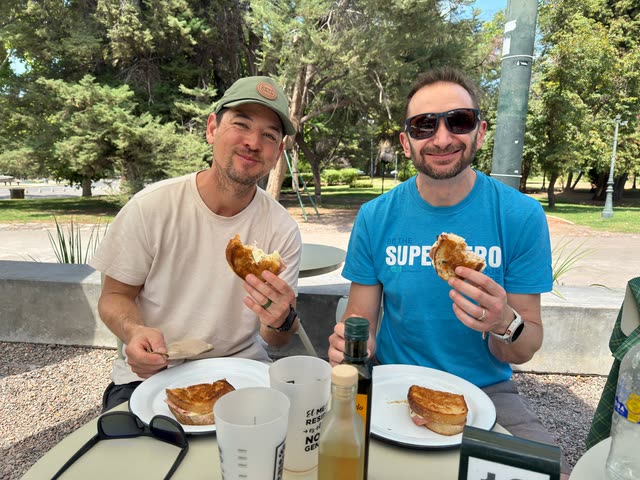
Mendoza · Collin and Chris, still talking about that sandwich.
After we left the park, we came back into Mendoza to decompress. Collin and Chris ordered what they thought was one kind of sandwich and got something else entirely. Everyone else enjoyed that moment.
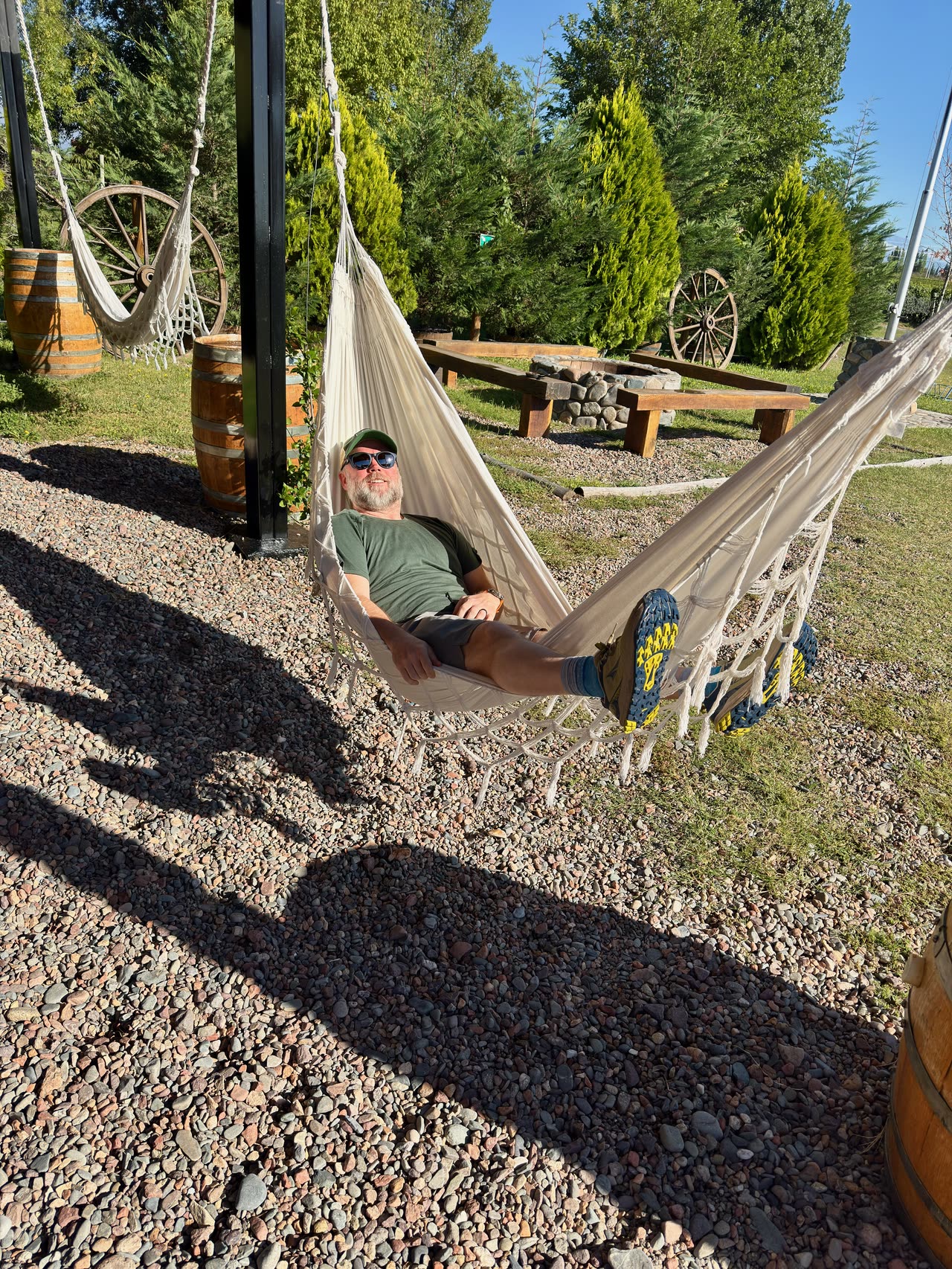
We visited three wineries that afternoon. Jayson claimed a hammock at the first stop and barely moved, with a ~19,000-foot mountain in the distance. We learned why American oak (larger pores) imparts flavor faster than French oak, and at the second winery I got to play their piano.
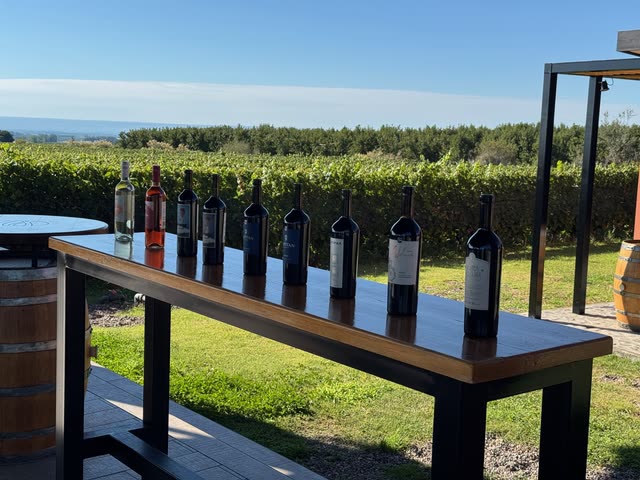
Bottles on the bar, vines stretching behind.
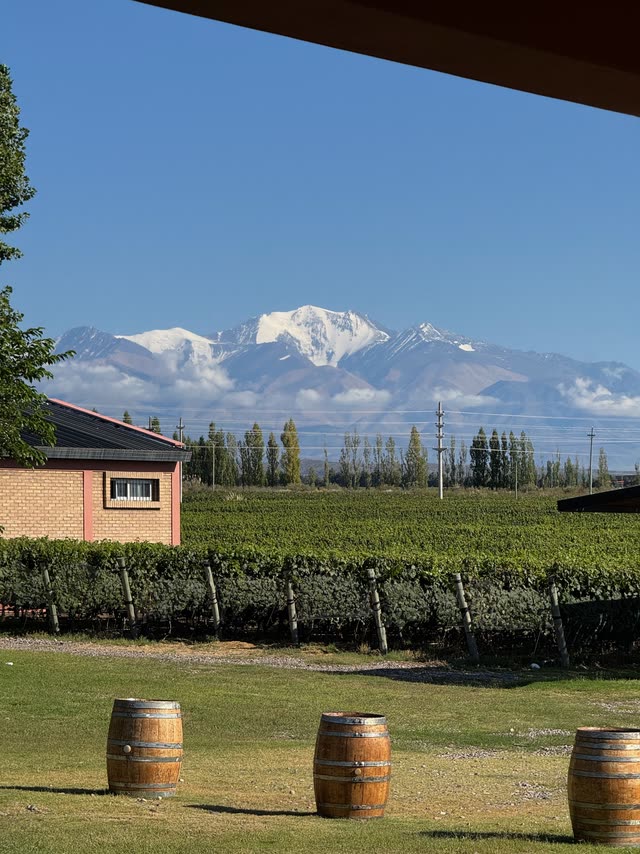
Snow peaks behind the vineyard. Glaciers to grapes.
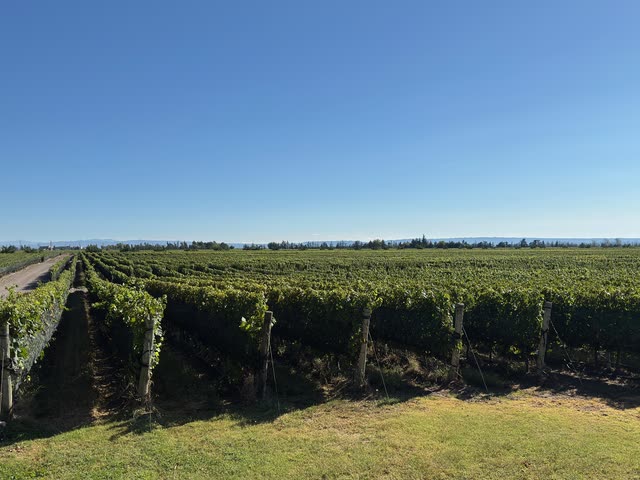
Vine rows and oak talk: American vs French.
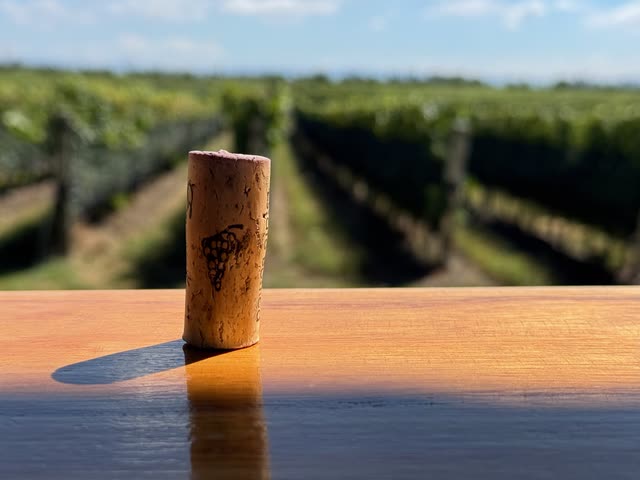
A cork on the table at winery two.
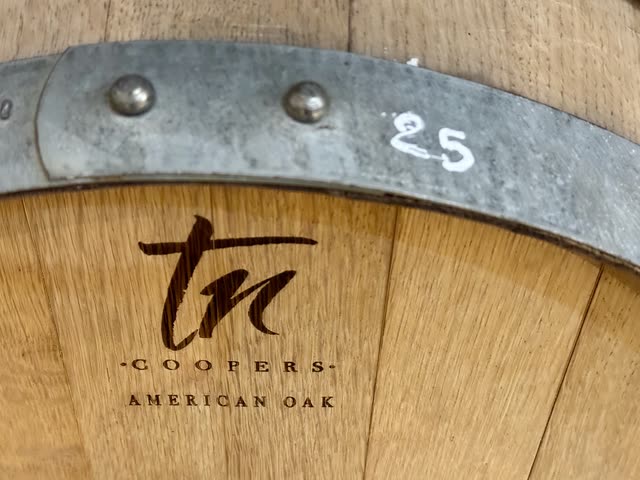
Barrels at winery two, TN Coopers branding on the staves.
-640.jpeg)
The cellar from above: a huge circular room of barrels.
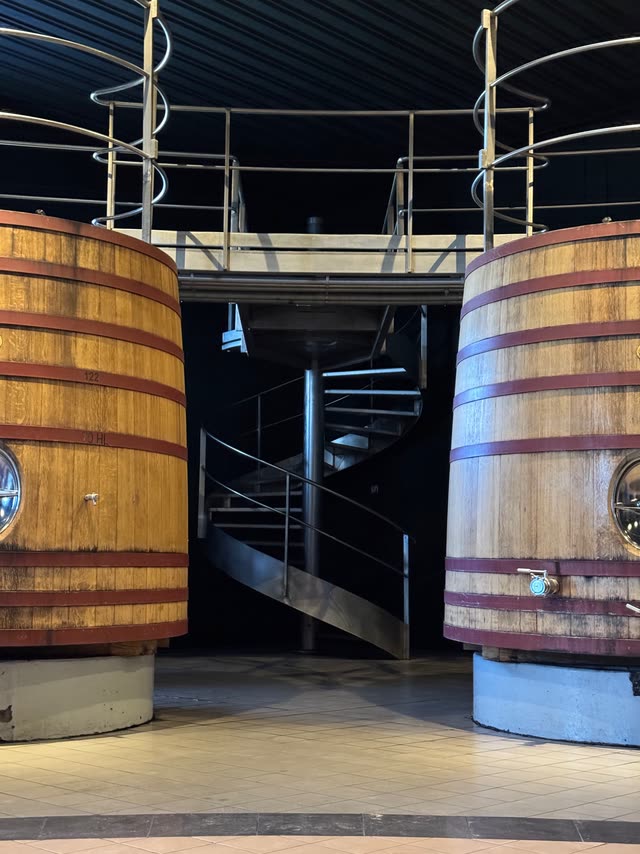
Wooden fermentation vats at the third winery.
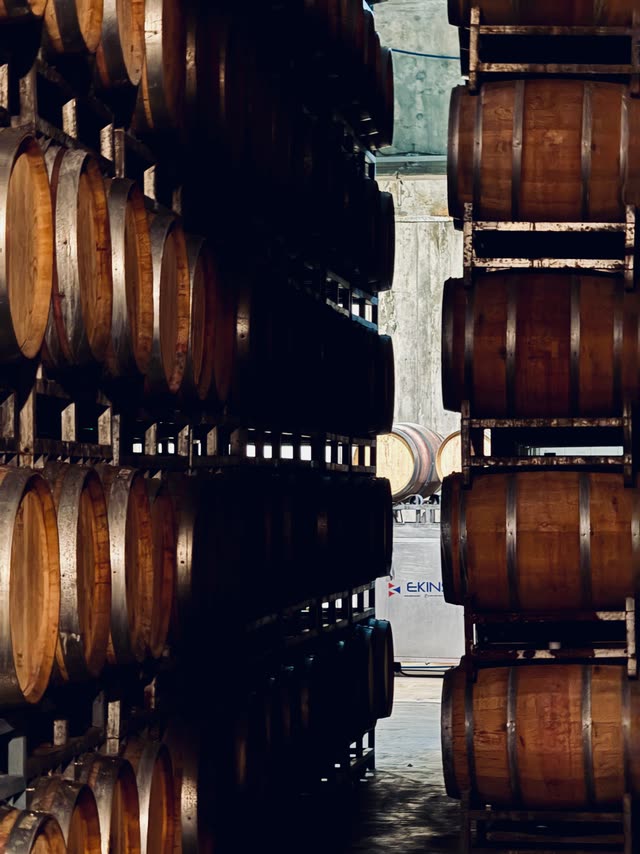
Barrel rows in a cool, dim cellar.
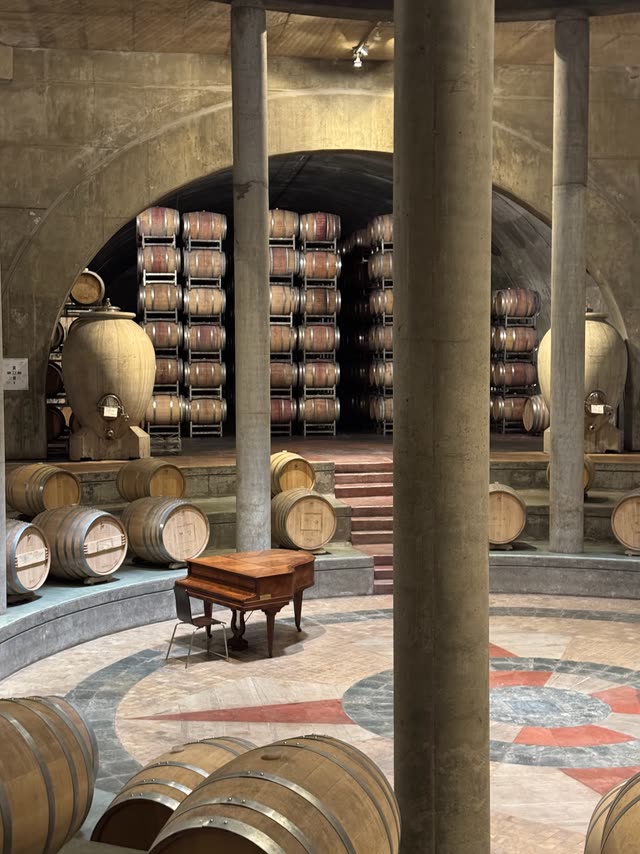
Arched cellar below the vines.
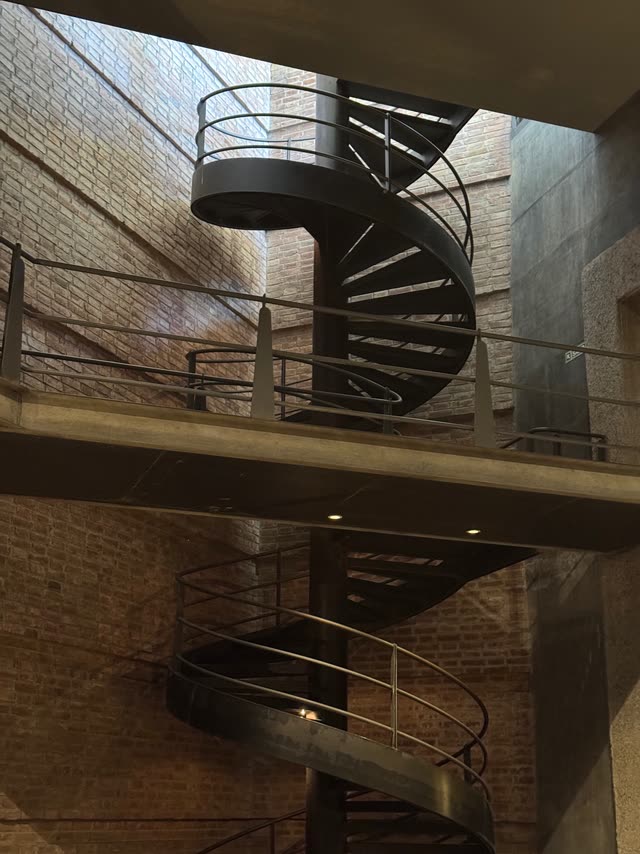
Winery · Spiral staircase, modern steel against old stone.
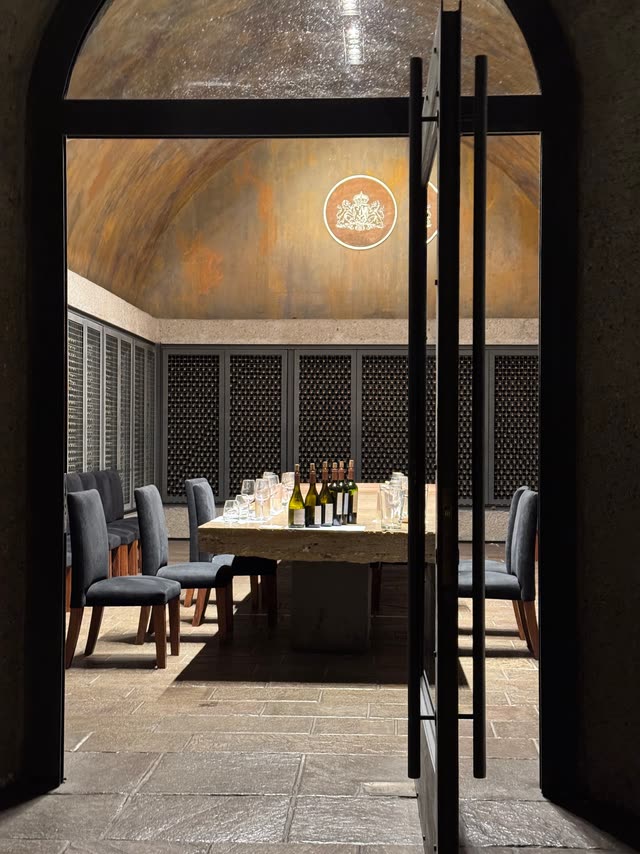
Tasting Room · Tasting table set with glasses and bottles.
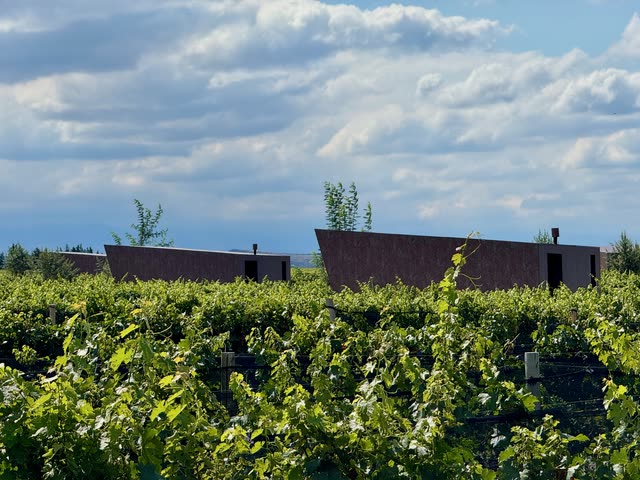
Mendoza · Winery building set cleanly against the valley.
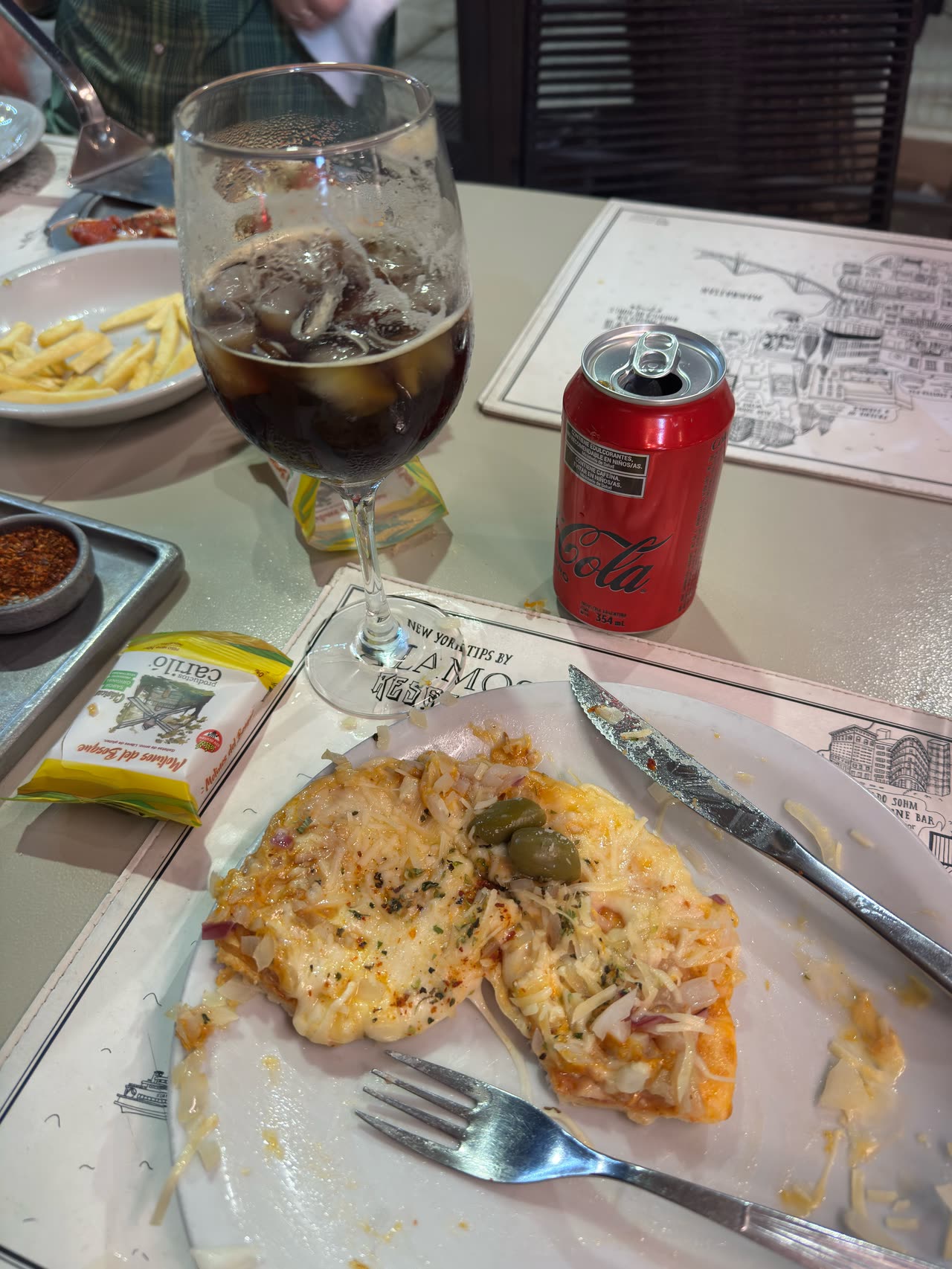
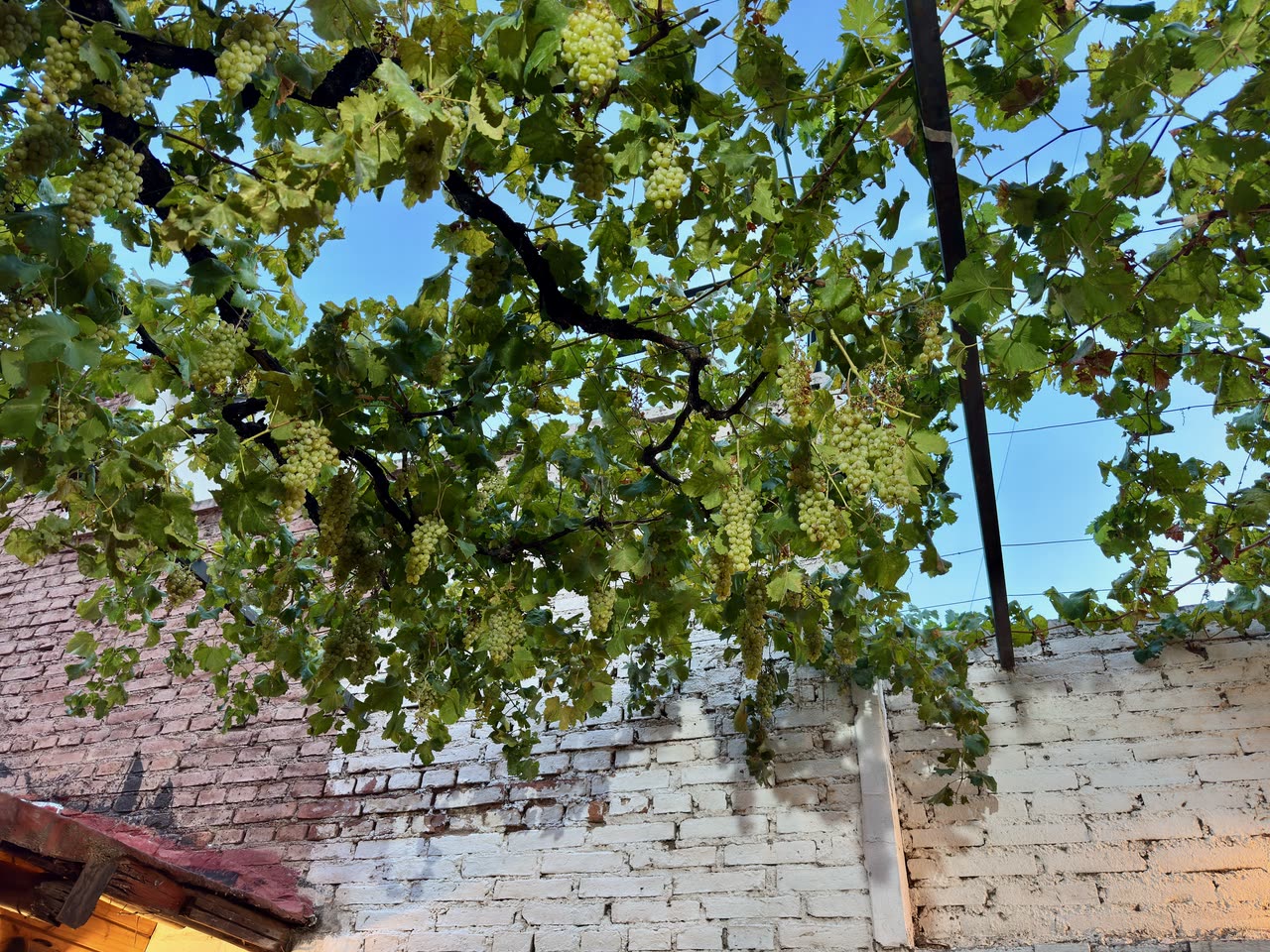
That evening we had Fernet with Coke, proper Argentinian fugazzeta, and then a great steak dinner under grape arbors. Two weeks earlier most of us had just met. By the end, after wind, altitude, and all the shared effort, we felt like a real team.